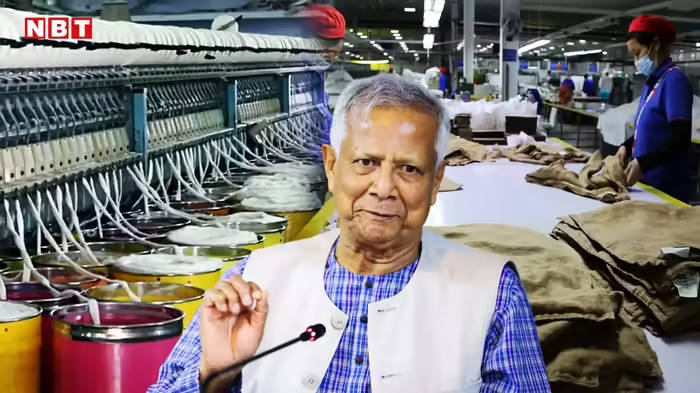
The interim government of Bangladesh led by Nobel laureate Muhammad Yunus is preparing to take a major policy decision that could significantly impact India–Bangladesh trade relations, particularly in the strategically vital textile sector. The Yunus administration is considering imposing a customs duty of 10 to 20 per cent on imported cotton yarn, most of which is sourced from India.
India is Bangladesh’s largest supplier of cotton yarn, a critical raw material for the country’s export-driven garment industry. Any move to impose duties is expected to have direct economic consequences for Indian exporters while also reshaping Bangladesh’s domestic textile landscape.
India Dominates Bangladesh’s Cotton Yarn Imports
According to trade data, India exported USD 3.57 billion worth of cotton yarn in 2025, with Bangladesh accounting for nearly 46 per cent of total shipments. Indian yarn constitutes over 80 per cent of Bangladesh’s total cotton yarn imports, making Dhaka heavily dependent on Indian supplies for its globally competitive ready-made garments (RMG) sector.
The Yunus government believes that imposing a customs duty could help arrest the decline in domestic cotton prices and provide relief to local spinners, who argue that duty-free Indian imports have pushed them to the brink of collapse.
Government Caught Between Mill Owners and Exporters
The proposed move has placed the Yunus administration in a difficult position. On one side are local textile mill owners, who have long demanded protective tariffs, claiming that cheaper Indian yarn has undercut domestic production and led to falling prices and underutilized capacity.
On the other side are garment exporters, who warn that any additional duty would increase production costs, disrupt supply chains, delay shipments, and ultimately weaken Bangladesh’s competitiveness in the global apparel market. Exporters argue that locally produced yarn is more expensive and inconsistent in quality, prompting global brands to prefer Indian supplies.
A Continuation of Restrictive Measures
This is not the first step taken by the Yunus government to curb Indian yarn imports. In April last year, Dhaka withdrew permission for cotton yarn imports from India through major land ports, a route that earlier accounted for nearly 32 per cent of India’s yarn exports to Bangladesh. Despite the restriction, domestic demand failed to revive significantly, leading to renewed calls for import taxation.
Critics see the proposed duty as part of a broader shift in Dhaka’s foreign and trade policy following the exit of former Prime Minister Sheikh Hasina, whose government maintained close ties with New Delhi. Since taking charge, the Yunus administration has been perceived as adopting a more adversarial stance toward India, while simultaneously working to strengthen relations with Pakistan.
Political Uncertainty Ahead of Elections
With national elections scheduled for February 12, it remains uncertain whether the interim government will move ahead with the duty or leave the final decision to the next elected administration. Officials suggest that the political sensitivity of the issue could delay implementation.
If imposed, the duty could mark a turning point in India–Bangladesh trade relations, potentially triggering responses from New Delhi and altering supply chains in South Asia’s largest textile corridor.
Discover more from SD NEWS agency
Subscribe to get the latest posts sent to your email.