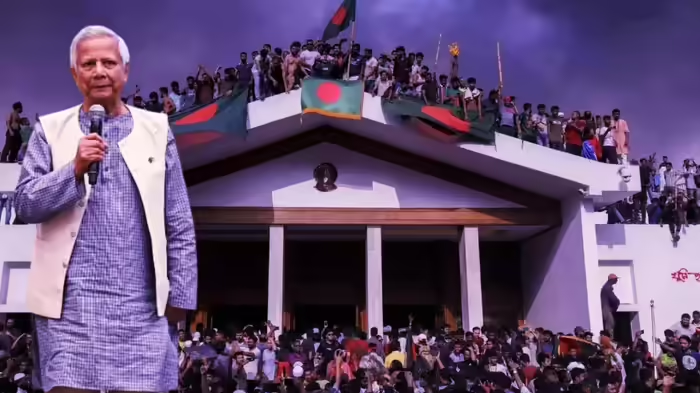
Dhaka: Voting has begun for 299 of Bangladesh’s 300 parliamentary seats, marking the country’s first general election since the fall of Sheikh Hasina’s government in August 2024. The election has drawn keen attention from across South Asia and the wider world. Though the Awami League, which secured over 35% voter participation in the past, was barred from contesting, hopes remain high that the elections will strengthen the country’s democratic institutions.
The polls are being conducted under the leadership of Mohammad Yunus, who promised a fair and transparent election. Yet, the larger question remains: what will Yunus do after today’s elections?
Transition and Transfer of Power
Following the conclusion of voting, Yunus’ primary focus will be overseeing a smooth transfer of power to the newly elected government. As Chief Adviser, he has repeatedly emphasized that his role is that of a “guardian of the transition”, and he has refused any permanent political office. Yunus has confirmed that once election results are announced, he will hand over full authority to the incoming government.
Implementing the July National Charter-2025
Yunus is also expected to push for the implementation of the July National Charter-2025, depending on today’s vote outcome. If approved, this charter would introduce significant legal reforms, including:
- Establishing a bicameral parliament modeled after countries like India
- Limiting the powers of the Prime Minister
- Instituting a two-term or ten-year limit for the Prime Minister
- Granting constitutional recognition to protests against Sheikh Hasina
During this transitional period, Yunus’ administration has focused on maintaining stability, especially as the Bangladesh Nationalist Party (BNP) and Jamaat-e-Islami-led coalition compete for power. Reports indicate that after handing over authority, Yunus intends to return to his work with the Yunus Centre and the Grameen Bank, refocusing on social business and poverty alleviation.
Presidential Speculations and Legacy
While Yunus has dismissed any personal ambitions to become President, discussions continue in Bangladesh about a possible national consensus to nominate him for the role, aiming to ensure stability and legitimacy for the incoming government.
Yunus will be remembered in Bangladesh as a polarizing yet pivotal figure:
- Steering the Nation: He led the country after Sheikh Hasina’s government fell, preventing civil unrest and safeguarding Bangladesh from fragmentation. His July National Charter-2025 proposes major parliamentary reforms, including a bicameral legislature and checks on the Prime Minister’s powers.
- Diplomatic Engagements: Leveraging his international reputation, Yunus sought financial assistance from the IMF and World Bank, negotiated tariff reductions with the U.S., and maintained strong ties with China and Pakistan, though relations with India worsened.
- Controversies and Extremism: Despite being a Nobel laureate for peace, Yunus’ tenure has been criticized for empowering Islamist elements. Several extremist leaders of Jamaat-e-Islami were released from prison under his watch, and there have been reports of violence against Hindus, with limited action taken to curb it.
Economically, Yunus’ administration slightly eased inflation but unemployment soared. The manufacturing sector, particularly the struggling garment industry, faces severe challenges. His vision of a “New Bangladesh” appears distant for many citizens. Experts warn that while Yunus may step down, the stability of the country now rests on the ability of the new government to meet public expectations, revive the economy, and protect key industries like textiles. Failure to do so could destabilize the nation.
Discover more from SD NEWS agency
Subscribe to get the latest posts sent to your email.