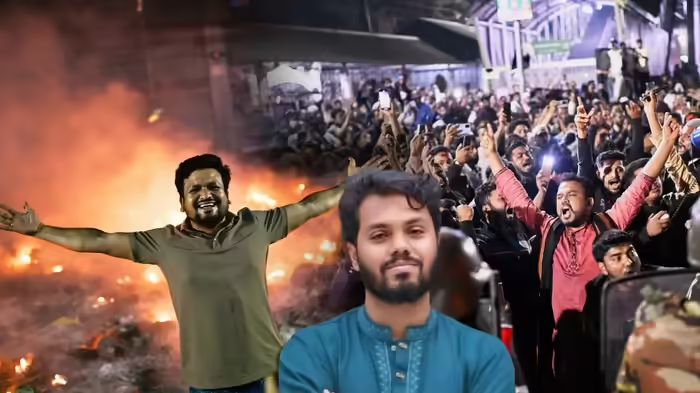
Dhaka: Bangladesh plunged into chaos after the death of Sharif Osman Hadi, the 32-year-old spokesperson of the Inquilab Forum and a vocal critic of India. Hadi, shot last Friday during a public campaign in Dhaka, was airlifted to Singapore General Hospital for treatment but succumbed to his injuries on Thursday. His death triggered nationwide protests and widespread unrest.
Violent Protests and Arson Across Cities
Following news of Hadi’s death, thousands of supporters gathered at Shahbagh Square and other locations, demanding justice and declaring him a “martyr.” The protests quickly escalated into violent unrest spanning Dhaka, Rajshahi, Chattogram, and other cities. Demonstrators set fire to the offices of major newspapers, including Prothom Alo and Daily Star, trapping journalists and staff inside. They also targeted properties associated with the Awami League and former Prime Minister Sheikh Hasina, causing extensive damage.
Indian Diplomatic Missions Targeted
In Chattogram and Rajshahi, protesters marched towards Indian diplomatic offices and the residence of India’s Deputy High Commissioner. Stones were hurled, and anti-India slogans were raised, including “End Indian aggression!” and calls to punish Awami League members. Security forces attempted to disperse crowds using tear gas in some areas, but tensions remained high throughout the night.
Political Context and Accusations
Protesters, including members of the National Citizen Party (NCP) and Students Against Discrimination (SAD), accused India of harboring the attackers and demanded the closure of Indian missions until the suspects are returned. NCP leader Sarjis Alam described the situation as “war-like.” Social media videos showed violent clashes near Indian diplomatic premises, highlighting the volatility of the situation.
Background of Sharif Osman Hadi
Hadi gained prominence as a student leader and anti-Hasina activist, advocating against both the Awami League and India’s influence in Bangladesh. He had recently shared a controversial “Greater Bangladesh” map on social media, depicting parts of northeast India as Bangladeshi territory, escalating tensions in bilateral relations. On 12 December, masked assailants shot him near a mosque in Dhaka, after which he was airlifted to Singapore. Despite medical intervention, he succumbed to severe brain injuries and organ failure.
Government Response and National Mourning
Interim government head Mohammad Yunus appealed for calm and urged citizens not to take the law into their own hands. A day of national mourning was declared, with special prayers to be held across mosques in Bangladesh. Yunus also pledged that those responsible for Hadi’s killing would face justice.
The violent unrest has left streets blocked, major highways disrupted, and security forces on high alert, with the situation remaining tense across multiple cities.
Discover more from SD NEWS agency
Subscribe to get the latest posts sent to your email.