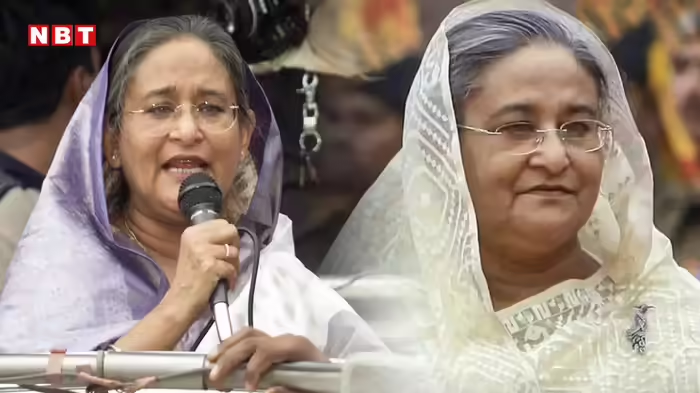
DHAKA: Bangladesh’s interim government, led by Muhammad Yunus, has announced that Sheikh Hasina’s party, the Awami League (AL), will not be allowed to contest the upcoming national elections in February 2026. The announcement was made on Wednesday in Dhaka by Shafiqul Alam, press secretary to the Chief Advisor, who emphasized that the ban on the party will remain in place.
This marks the first time since Bangladesh’s independence in 1971 that the Awami League has been completely excluded from the electoral process. The decision comes just a day after several U.S. lawmakers urged Bangladesh to hold an “inclusive and fair election.”
Background of Restrictions
The interim government had imposed restrictions on the Awami League in May this year. Previously, in October 2024, the party’s influential student wing, Chhatra League, was also banned. On 17 November, the International Criminal Tribunal sentenced Sheikh Hasina and former Home Minister Asaduzzaman Khan Kamal to death, a move widely seen as an attempt to permanently close Sheikh Hasina’s political chapter in Bangladesh.
International Concerns
The exclusion of Awami League has drawn criticism internationally. On 23 December, five U.S. lawmakers—Gregory Meeks, Bill Huizenga, Sydney Kamlager-Dove, and Julie Johnson—sent a letter to Chief Advisor Muhammad Yunus expressing concern over the move. They warned that barring a major political party from elections could damage Bangladesh’s democratic credibility. In response, Shafiqul Alam stated that he had not yet seen the letter and was unaware of its contents.
Domestic Implications
Sheikh Hasina, in a written interview with Indian media, stated that if the Awami League is barred from elections, its supporters will abstain from participating in the voting process. Experts note that the party still enjoys significant grassroots support across Bangladesh, which could manifest in growing political unrest. Analysts warn that excluding a major political force like the Awami League may pose serious risks to the country’s democratic future and stability.
The interim government’s decision has intensified political uncertainty in Bangladesh, raising questions about the fairness of the upcoming elections and the broader trajectory of democracy in the country.
Discover more from SD NEWS agency
Subscribe to get the latest posts sent to your email.