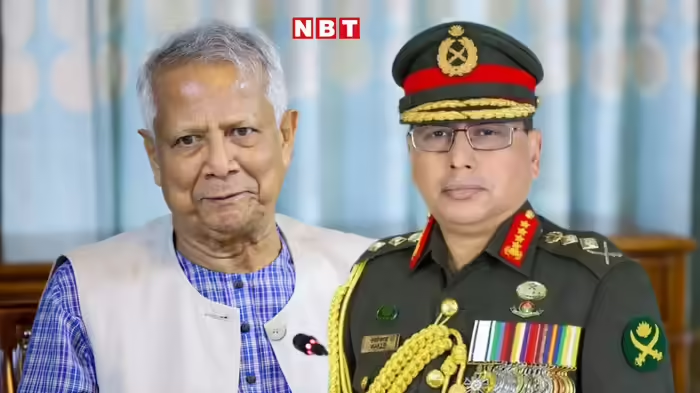
Dhaka: Amid steadily rising tensions between India and Bangladesh, the Bangladeshi Army has initiated a significant military restructuring proposal that could further strain bilateral defence ties. The armed forces have moved to create a new para-commando brigade along with two additional special para-commando battalions, a step being viewed as aligned with the interim government’s increasingly assertive stance towards India.
According to a report by North East News, the proposal has been prepared by the Bangladesh Armed Forces Division and forwarded to the Ministry of Defence and the Office of Chief Adviser Muhammad Yunus for approval. The plan was discussed during a two-day conference of senior army generals and formation commanders held at Dhaka Cantonment on January 25 and 26.
Following the conference, Bangladesh Army Chief General Waker-Uz-Zaman is scheduled to visit the 66th Infantry Division in Rangpur, accompanied by at least one Lieutenant General and four Brigadiers, signalling the importance being attached to the proposed changes.
Key Document Circulated Among Top Generals
The report claims that an eight-page document outlining the proposals was circulated among top military leadership on January 5. Those briefed reportedly included Army Chief General Waker-Uz-Zaman, Principal Staff Officer Lieutenant General SM Kamrul Hasan, National Defence College Commandant Lieutenant General Mohammad Shahinul Haque, Lieutenant General Manur Rahman, and several Major Generals.
Sources familiar with the document said it focuses on progress reviews across different operational sectors and outlines a recalibration of Bangladesh’s military partnerships amid shifting geopolitical priorities.
Rethinking Training Ties With India and Russia
One of the most sensitive agenda items discussed during the conference was a proposal to reassess the long-standing practice of sending Bangladeshi officer cadets for training in India and Russia. The report suggests that Dhaka is considering limiting or suspending such training arrangements based on evolving bilateral relations, military cooperation terms, and financial conditions.
For decades, Indian and Russian military academies have been preferred destinations for Bangladeshi officers due to their scale, experience, and strategic proximity. Any move to reduce reliance on these institutions would mark a significant departure from past defence cooperation frameworks.
Impact on Defence Relations
Defence sources in Dhaka acknowledge that these decisions could directly affect military ties between Bangladesh and India, as well as Bangladesh and Russia. Analysts see the developments as part of a broader realignment under the Yunus-led interim administration, which has adopted a noticeably firmer posture towards New Delhi since coming to power.
Army Chief General Waker-Uz-Zaman is expected to publicly address these potentially controversial decisions, including the proposal to raise a new para-commando brigade and two battalions. The proposal had earlier been forwarded on November 11, 2025, to the Ministries of Public Administration and Finance for administrative clearance before being sent to the Defence Ministry and subsequently to Yunus for final approval.
Strategic Signals
The proposed expansion of elite forces and the reconsideration of traditional training partnerships are being closely watched in New Delhi. Observers say the moves signal not only Bangladesh’s evolving military priorities but also the growing influence of political leadership over defence policy amid strained regional relations.
As diplomatic frictions persist, the army’s latest proposals add a new strategic dimension to India-Bangladesh ties, raising questions about the future trajectory of defence cooperation between the two neighbours.
Discover more from SD NEWS agency
Subscribe to get the latest posts sent to your email.