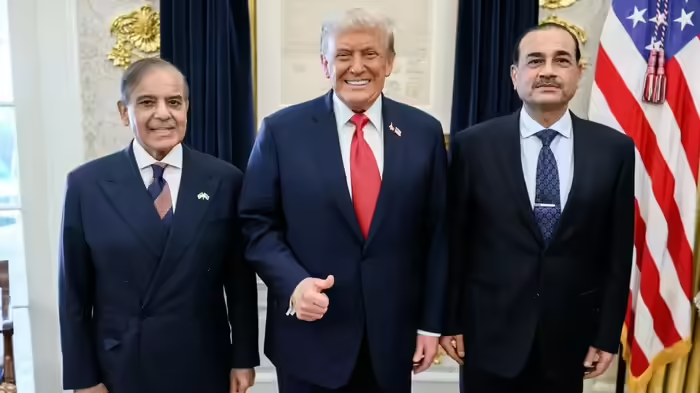
Islamabad: Since Donald Trump’s election as U.S. President last year, the United States and Pakistan appeared to be drawing closer. Trump repeatedly praised Pakistan’s Army Chief General Asim Munir and Prime Minister Shahbaz Sharif, but recent events in Pakistan have highlighted the fragile reality on the ground, signaling potential risks for Washington’s strategic bets.
Last week, Pakistan’s capital, Islamabad, was rocked by a massive suicide attack on a Shia mosque, killing 36 people. The attack exposed the government and army’s inability to guarantee security in the capital. For the U.S., it sends a warning that the high-stakes partnership involving General Munir, Pakistan’s mineral wealth, and strategic interests may not be as stable as anticipated. Experts suggest that Trump’s preferred “field marshal” Munir faces significant hurdles, making the American gamble increasingly precarious.
Mineral Diplomacy Meets Security Challenges
Last year, General Munir met Trump at the White House, presenting a deal that offered access to Pakistan’s vast mineral reserves. While Trump welcomed the proposal, Pakistan’s security situation presents major obstacles to extracting these resources.
Balochistan, home to much of Pakistan’s mineral wealth, remains a region of insurgency. Armed groups have challenged both government and army authority, using modern weaponry acquired from U.S. sources in Afghanistan. Groups such as the Baloch Liberation Army (BLA) and Tehrik-i-Taliban Pakistan (TTP) have established control over several districts, including government offices and key mineral sites.
Three Major Challenges for Munir-Trump Project
- Weak Security: The spate of attacks in Islamabad has raised fears of recurring violence across Pakistan’s cities, worrying both local authorities and international partners.
- Rebellion in Balochistan: Insurgents in mineral-rich areas pose a serious threat to state control, complicating efforts to develop mining projects.
- Advanced Rebel Weaponry: Armed groups in Balochistan possess U.S.-made rifles, night-vision equipment, and other modern weaponry left behind in Afghanistan, making conventional military operations difficult.
Foreign Companies Cautious
International mining firms are wary. Rick Gold, a leading firm, has reported close monitoring of its flagship Reco Dick Mine project in Balochistan, citing security, construction timelines, and capital costs as major concerns. While Pakistani officials publicly assure investors of “world-class” infrastructure and security, BLA’s armed presence in several areas tells a different story.
Munir’s Path Forward
To maintain U.S. confidence and Trump’s favor, General Munir must overcome three key challenges:
- Combat well-equipped insurgents along Pakistan’s western borders.
- Win the trust of local Baloch communities, demonstrating that mining projects will benefit them rather than exploit their resources.
- Balance Pakistan’s ties between the U.S. and China, ensuring stability for foreign investors while managing strategic partnerships.
Failure in any of these areas could undermine both Munir’s standing in Pakistan and Trump’s high-stakes diplomatic and resource gamble.
Discover more from SD NEWS agency
Subscribe to get the latest posts sent to your email.