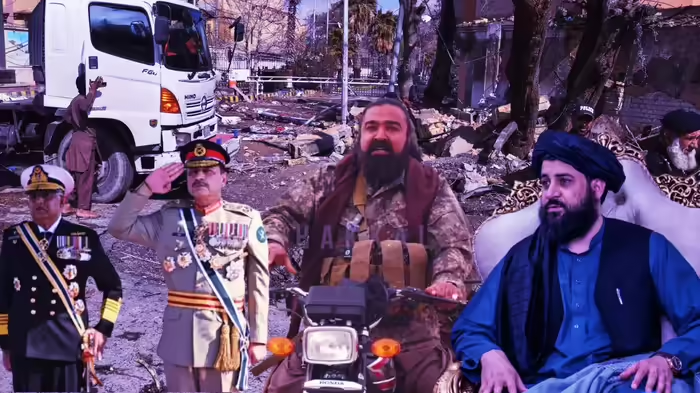
Kabul: Following the series of severe attacks across 12 cities in Balochistan, Pakistan attempted to deflect blame onto India and Afghanistan. While India firmly rejected Pakistan’s allegations, the Taliban-led government in Afghanistan has directly exposed Pakistan’s false narratives.
Hurryat Radio, Afghanistan’s state-run media outlet, published a report calling Pakistan “deceptive and dishonest.” The channel stated that “for years, the Pakistani military has relied on familiar tactics to divert attention from internal instability. Whenever internal divisions deepen, Pakistan activates its machinery of accusations, making Afghanistan the perennial scapegoat.”
The report added that Pakistan’s strategy is designed to conceal failures and reinforce a narrative of national siege. This, according to the Taliban-controlled media, is not a genuine governance policy but part of a long-standing propaganda campaign. Meanwhile, images of Baloch separatist leader Bashir Zeb leading attackers in Balochistan confirm that public trust in Pakistan is rapidly declining.
Bashir Zeb’s Role Revealed
Pakistan has long claimed that Bashir Zeb operates under Taliban protection in northern Afghanistan. However, in the recent attacks, Zeb was seen in Balochistan, leading assailants on a motorcycle during the Herop 2.0 operation. This clearly demonstrates that Pakistan’s previous claims of him being a foreign-backed threat were false. Taliban media highlighted that even Pakistan’s own media had to acknowledge that Zeb was operating from Balochistan itself. Such revelations severely undermine the credibility of Pakistan’s government and media.
Pakistani Government Losing Control
The Taliban further noted that Pakistan has repeatedly made false claims against leaders of Tehreek-e-Taliban Pakistan (TTP), aiming to create a perpetual external threat to justify authoritarian control and conceal policy failures. In today’s information age, however, propaganda is quickly exposed.
Hurryat Radio concluded that Pakistan’s failed strategies have tangible consequences within its own borders: the government’s influence in volatile tribal areas is waning, dissatisfaction is rising, and even religious groups are increasingly skeptical. Efforts to assert credibility through madrasas or public narratives remain superficial, failing to address core issues or appease marginalized communities whose rights and opportunities have been systematically denied.
Discover more from SD NEWS agency
Subscribe to get the latest posts sent to your email.