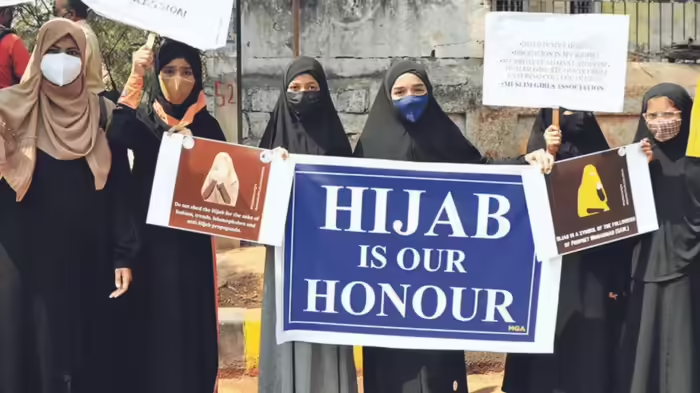
Vienna: Austria’s lower house of Parliament has passed a proposal to ban Muslim headscarves for girls under the age of 14 in schools, sparking debate over religious freedom and human rights. The government has described the hijab as a “symbol of oppression,” while human rights groups and Muslim organizations have criticized the move as unconstitutional.
Background and Controversy
The proposed law, supported by a coalition of three ruling parties and the far-right Freedom Party, seeks to prevent young girls from wearing hijabs in schools. The Freedom Party also demanded that the ban be extended to school staff. The Greens, Austria’s smallest parliamentary party, opposed the measure, arguing it violates constitutional rights.
Human rights organizations, including Amnesty International, have voiced concern that the ban could exacerbate existing discriminatory attitudes toward Muslims. The official representative body of Austrian Muslims called the proposal a violation of fundamental rights.
Government’s Justification
Yannick Shetty, parliamentary leader of the coalition’s smallest party, the Liberal Neos, stated, “This is not about restricting freedom, but protecting the liberty of girls up to 14 years old. The hijab is not merely a piece of clothing; in the case of minors, it can facilitate sexual exploitation and shield girls from male scrutiny.”
Claudia Plakolm, junior minister for integration from the ruling Conservative People’s Party, described the hijab for minors as a “symbol of oppression.”
Previous Legal Challenges
Austria’s Constitutional Court struck down a similar ban in 2020, which applied to children under 10, ruling that it discriminated against Muslims and violated the state’s duty to remain religiously neutral. The court emphasized that any restrictions must be justified by a compelling reason. The government has reportedly initiated a study to address this requirement, though details remain limited.
The new proposal has reignited the debate on religious freedom, gender rights, and state intervention in personal and religious choices, with implications for both Austrian society and the broader European context.
Discover more from SD NEWS agency
Subscribe to get the latest posts sent to your email.