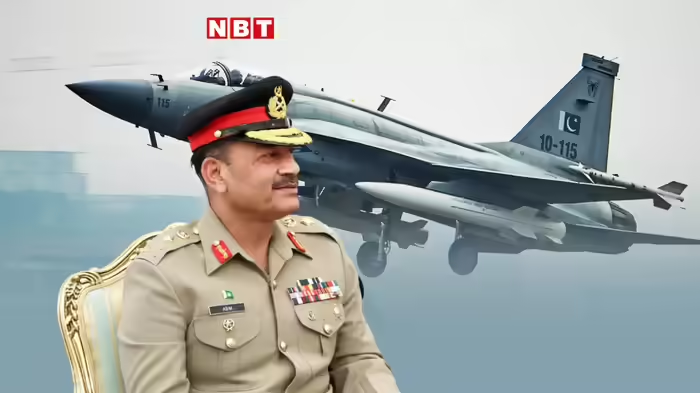
Islamabad: This year has been significant for Pakistan’s defense sector, particularly in fighter jet exports. The JF-17 fighter jet, co-developed by Pakistan and China, secured two major deals in 2025. The first was with Azerbaijan, which signed a $4.6 billion agreement to purchase 40 JF-17C jets. Now, according to Reuters, Libya has finalized a historic deal worth $4–4.6 billion to acquire 16 JF-17C fighter jets, along with 12 Super Mushshak trainer aircraft and other air, land, and naval military equipment, the specifics of which remain undisclosed.
The deal involves Libya’s Khalifa Haftar-led Libyan National Army (LNA), which controls eastern Libya, including the strategic city of Benghazi. The LNA confirmed that a defense cooperation agreement with Pakistan includes weapon transfers and joint training. Deliveries are expected over the next two and a half years.
A Controversial But Strategic Move
The Libya deal is controversial, as the country has been embroiled in civil war for years, and the United Nations has imposed an arms embargo on Libyan factions. Nevertheless, the acquisition of JF-17 jets signals Pakistan’s entry into the Arab military market. Historically, Pakistan has maintained strong Islamic ties with Arab nations, and the region has a record of investing in high-value defense deals. Yet, until now, no Arab country had purchased Pakistani jets, raising questions about why this market remained untapped.
Why Arab States Hesitated
For most major Arab defense buyers, Pakistan’s JF-17 does not compete with Western advanced fighter jets. Saudi Arabia, for instance, operates Eurofighter Typhoons and is exploring fifth-generation jets like the F-35 and Rafale. Qatar has purchased multiple 4.5-generation fighter jets over the past decade, while the UAE secured a large order of 80 Rafale F4 jets. In comparison, the JF-17, though capable, has not been a priority for these nations.
According to Forbes, Libya’s deal with Pakistan was a necessity. After the fall of Muammar Gaddafi in 2011, Libya’s air force weakened drastically due to prolonged civil conflict. While the UN-backed Tripoli government received Turkish drones, the LNA had limited aerial resources. In this context, the AESA radar-equipped JF-17C with long-range PL-15 missiles provides the LNA a significant tactical advantage.
Significance of the Deal
The Libya agreement marks a strategic breakthrough for Pakistan’s defense exports in the Arab world. It demonstrates the potential for JF-17 jets to find buyers in regions traditionally dominated by Western-made fighters, opening new opportunities for Islamabad in the defense market.
Discover more from SD NEWS agency
Subscribe to get the latest posts sent to your email.