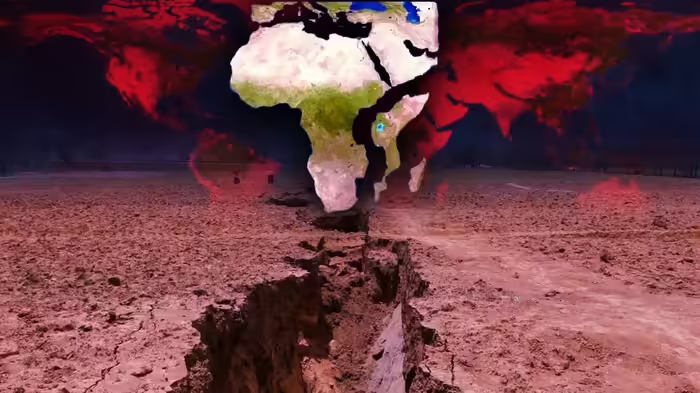
Washington, January 23, 2026: A recent study has revealed that Africa is experiencing extraordinary geological activity beneath its surface, causing the continent to slowly split apart. Scientists say this rifting could eventually lead to the formation of a new ocean.
The division is occurring along the East African Rift (EAR), where the Somali Plate in the eastern part of the continent is gradually moving away from the larger Nubian Plate. Over time, this separation is expected to create a new ocean basin between the two landmasses.
Slow but Continuous Rift
Geophysicists emphasize that the process is extremely slow, taking millions of years to complete, with movements of just a few millimeters per year. The rifting system, shaped like a “Y,” is forming where the Nubian and Somali plates diverge from the northern Arabian Plate, converging at Ethiopia’s Afar region—one of the rare “triple junctions” on Earth where three tectonic rifts meet. This includes the Ethiopian Rift, the Red Sea Rift, and the Gulf of Aden Rift.
Virginia Tech geophysicist Dr. Sara Stamps notes that the rift is widening fastest in the north, suggesting that the initial stages of ocean formation will occur there. Parts of the Afar region are already below sea level, and as the rift deepens, seawater will begin to flood the separating plates, eventually forming a new ocean.
The plates are moving apart at an average rate of 0.28 inches (7 mm) per year. While it may take tens of millions of years for a full ocean basin to form, the rift is already influencing the region with increased seismic and volcanic activity. Scientists attribute the rifting to a mantle plume—a rising column of hot material beneath the Earth’s crust—that is gradually pushing the surface apart.
This study highlights the dynamic nature of Earth’s tectonic plates and provides a rare glimpse into the very long-term evolution of continents and oceans.
Discover more from SD NEWS agency
Subscribe to get the latest posts sent to your email.