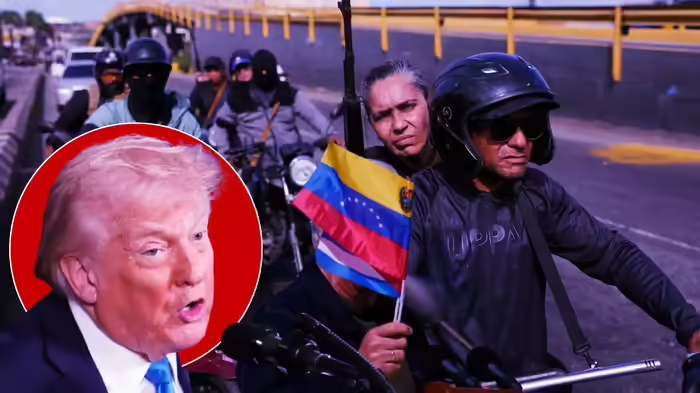
Havana / Caracas, January 5, 2026: The latest U.S. military strike on Venezuela has escalated tensions in Latin America, leaving 32 Cuban fighters dead while defending Venezuelan President Nicolás Maduro. Cuba, a long-standing ally of Venezuela with close ties to China and Russia, condemned the attack and announced two days of national mourning on January 5 and 6 to honor the fallen.
According to Prensa Latina, the Cuban personnel were killed during a direct confrontation with U.S. forces or from bombings targeting key facilities. These fighters were operating under the Venezuelan government’s request to assist in military operations, highlighting Cuba’s continued involvement in the region.
U.S. Operation Against Maduro
The strike, ordered by former President Donald Trump, aimed to capture President Maduro and his wife. The operation’s aftermath has shocked Venezuelan citizens, sparking protests demanding Maduro’s return. Venezuela’s Defense Minister, General Vladimir Padrino, stated on national television that a large portion of Maduro’s security forces and Venezuelan soldiers were “brutally killed” during the operation, though the exact casualty figures were not released. The New York Times cited sources claiming at least 40 fatalities in total.
Trump, speaking from Air Force One, acknowledged that “many Cubans were killed” during the strike while claiming no American casualties. He also reportedly warned Colombian President Iván Duque of similar operations if the political situation in Venezuela escalates further. Trump further suggested that Cuba, heavily reliant on Venezuelan oil and financial support, is on the verge of collapse.
Shadows of the 1962 Cuban Missile Crisis
The international community now wonders whether this event could trigger a crisis reminiscent of the 1962 Cuban Missile Crisis. During that Cold War standoff, the Soviet Union deployed nuclear-capable missiles in Cuba, bringing the world perilously close to nuclear conflict. The crisis ended only after the U.S. agreed to remove its missiles from Turkey, prompting the Soviets to withdraw theirs from Cuba.
Cuba maintains strong ties with Russia, which continues to provide financial and strategic support. Analysts warn that any U.S. misstep could provoke serious consequences, given Cuba’s historical willingness to challenge American power directly. The region watches closely, as renewed conflict could destabilize Latin America and rekindle Cold War-era tensions on U.S. soil.
Discover more from SD NEWS agency
Subscribe to get the latest posts sent to your email.