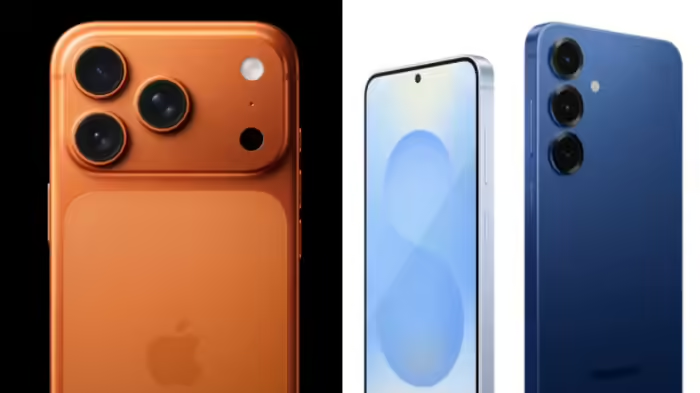
The year 2025 marked a significant shift in the smartphone industry, as manufacturers focused on features that balance performance, durability, and everyday usability. Leading brands such as Samsung, Apple, OnePlus, Vivo, Xiaomi, Oppo, and others rolled out multiple new devices, showcasing major upgrades in AI integration, battery capacity, camera technology, and ultra-slim design. While some innovations struck a chord with consumers, others failed to translate buzz into sales.
Overall, 2025 revealed a clear industry direction: smartphones are no longer just about raw power, but about making daily life simpler, smarter, and more efficient.
The Return of Ultra-Slim Smartphones
Over the past few years, smartphones had grown noticeably thicker due to larger cameras and batteries. In 2025, companies made a conscious effort to reverse that trend. Apple, Samsung, and several other brands introduced remarkably slim devices that grabbed attention for their aesthetics.
Samsung kick-started this trend with the Galaxy S25 Edge, followed by Tecno’s Pova Slim and Apple’s much-discussed iPhone Air. While these phones generated strong interest for their sleek designs, not all of them enjoyed commercial success—highlighting the gap between design appeal and consumer expectations.
Big Batteries Without the Bulk
One of the standout features of 2025 was the rise of large-capacity batteries combined with slim form factors. Chinese smartphone makers led the charge, introducing devices with batteries as large as 7,550mAh. Models like the Oppo Find X9 Pro, Poco F7, and others proved that long battery life no longer requires heavy or bulky phones.
This breakthrough was made possible by silicon-carbon battery technology, which allowed manufacturers to increase battery capacity while keeping devices lightweight and thin. As a result, battery life became a key selling point across price segments.
IP69 Protection Reaches Mid-Range Phones
Previously limited to premium flagship devices, IP69 water and dust resistance became more accessible in 2025. Several mid-range smartphones adopted this advanced protection standard, replacing the more common IP68 rating.
IP69 offers enhanced protection against high-pressure water jets and extreme temperatures, making smartphones more durable for everyday use. By democratizing this feature, brands aimed to offer better device longevity and value to consumers.
AI Integration Takes Center Stage
Artificial Intelligence emerged as the most defining smartphone feature of the year. After Samsung introduced Galaxy AI with the S24 series in 2024, AI became a standard expectation across brands in 2025.
Samsung further refined Galaxy AI, while other manufacturers rolled out features such as AI-powered translation, live call translation, smart photo editing, object erasing, and contextual suggestions. Apple also improved its Apple Intelligence platform, though analysts believe it still trails Samsung in AI-driven smartphone experiences.
Major Camera Upgrades Across Brands
Camera technology saw notable improvements in 2025. Smartphones featured up to 200MP high-resolution sensors, enhanced optical zoom, periscope lenses, and AI-assisted imaging tools. Many devices also supported 8K video recording, catering to content creators and photography enthusiasts.
Samsung’s Galaxy S series continued to excel in zoom and imaging quality, while Apple’s iPhone 17 series introduced professional-grade video modes, advanced HDR, cinematic recording, and Center Stage—a feature that automatically keeps users in frame during video calls.
Meanwhile, the Xiaomi 17 Ultra stood out with its 200MP periscope camera, delivering exceptional zoom and detailed long-distance photography.
The Big Picture
The smartphone landscape in 2025 was shaped by a push toward smarter AI, longer battery life, slimmer designs, and stronger durability. While not every experiment succeeded commercially, the year clearly demonstrated that innovation now revolves around practical intelligence and user-centric design, rather than just flashy specifications.
As brands move into 2026, the lessons of 2025 will likely influence a new generation of smartphones—ones that aim not just to impress, but to endure.
Discover more from SD NEWS agency
Subscribe to get the latest posts sent to your email.