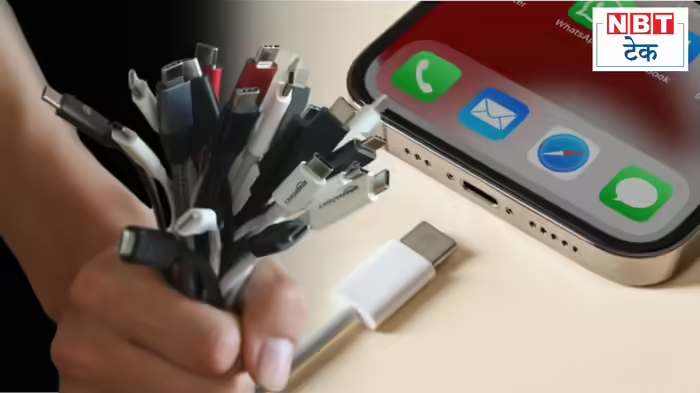
Social media is flooded with alarming claims suggesting that charging an iPhone with an Android Type‑C cable can damage the phone’s charging port. Short videos and reels warn users to stay away from “Android cables,” creating fear among iPhone owners. But how true is this claim?
To verify the truth, we conducted an in‑depth investigation, studied technical reports, and examined global charging standards. What emerged was a reality very different from the viral rumors.
The Viral Claim: Fact or Fiction?
The popular claim says that Android Type‑C cables have more connectors or a different internal design than Apple’s Type‑C cables, and that plugging them into an iPhone can permanently damage the charging port.
This belief has spread so widely that many iPhone users now hesitate to use any Type‑C cable that didn’t come directly from Apple.
However, there is no technical evidence to support this fear.
Why Did Apple Switch to Type‑C?
Apple did not adopt the Type‑C port by choice alone. The change was driven by European Union regulations, which mandated a universal charging standard for mobile devices to reduce electronic waste and improve user convenience.
The core idea behind this regulation was simple:
👉 Any standard Type‑C cable should be able to charge any Type‑C device, including iPhones.
If Apple had designed its Type‑C port to be incompatible with standard cables, it would have violated EU rules.
What About the “Different Connectors” Argument?
The confusion largely stems from how Type‑C cables look internally.
A standard USB Type‑C port has 24 pins, but not every cable uses all 24 pins. The number of active pins depends on what the cable is designed for:
- Basic charging
- High‑speed data transfer
- Thunderbolt support
- High‑wattage power delivery
Apple’s Type‑C cables are often optimized for its ecosystem and Thunderbolt features, which can make their internal pin layout appear different. But the core pin structure for charging remains universal across all Type‑C cables.
In simple terms:
- The essential charging pins are located in the same position
- Android and iPhone devices recognize these pins instantly
- Charging begins safely, regardless of brand
Verdict: Is the Rumor True?
No. The rumor is false.
Using an Android Type‑C cable will not damage your iPhone. At worst, you may notice:
- Slower or faster charging speeds
- Differences in data transfer performance
But your iPhone’s hardware will remain completely safe.
What Should Users Actually Be Careful About?
There are only two real precautions iPhone users should follow:
- Use the right cable for data transfer
If you want fast data speeds, especially for large files or professional use, choose a cable designed for high‑speed or Thunderbolt data transfer. - Avoid cheap or fake cables
Damage to phones usually comes from poor‑quality or counterfeit cables, not from Android cables. Any original, branded Type‑C cable—even one that came with an Android phone—is safe to use.
The Bottom Line
Your iPhone doesn’t care whether a Type‑C cable comes from Apple, Samsung, or any other brand. What matters is quality and certification, not the logo on the box.
So the next time someone warns you against using an Android Type‑C cable with your iPhone, you can confidently tell them:
Discover more from SD NEWS agency
Subscribe to get the latest posts sent to your email.