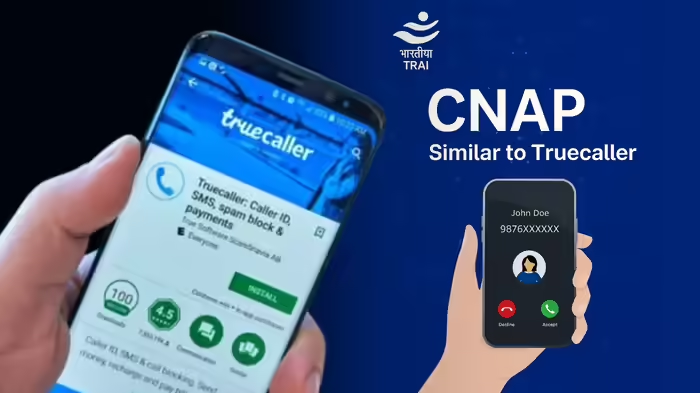
With the Indian government pushing telecom companies to implement CNAP (Calling Name Presentation), questions are arising about the future of Truecaller in India. Currently, Truecaller has around 250 million users in the country, but CNAP could make its primary feature freely available to users directly through mobile networks.
What is CNAP and How Will It Work?
CNAP, or Calling Name Presentation, is a network-level feature that displays the caller’s name on incoming calls, replacing the need for any third-party app. Users will no longer need to install additional apps or grant permissions to identify unknown callers. The government aims to implement CNAP to reduce spam calls and enhance user safety.
Impact on Truecaller
Most Indian users rely on Truecaller to identify incoming callers. Once CNAP is fully implemented, this key feature will be available natively through telecom networks. New phone setups may no longer require users to download Truecaller, potentially affecting the app’s business model since telecom companies will now provide its main functionality.
CNAP vs Truecaller: Which is More Reliable?
The major difference lies in data sources. CNAP uses verified KYC data to display caller names, making it more accurate. Truecaller, on the other hand, relies on crowdsourced information, which can sometimes be incorrect. This makes CNAP a more trustworthy option for users.
While CNAP may reduce the necessity of Truecaller in the future, experts note that if Truecaller adapts its business model, it could continue to retain a user base. Ultimately, time will tell whether Truecaller can remain relevant in a CNAP-enabled India.
Discover more from SD NEWS agency
Subscribe to get the latest posts sent to your email.