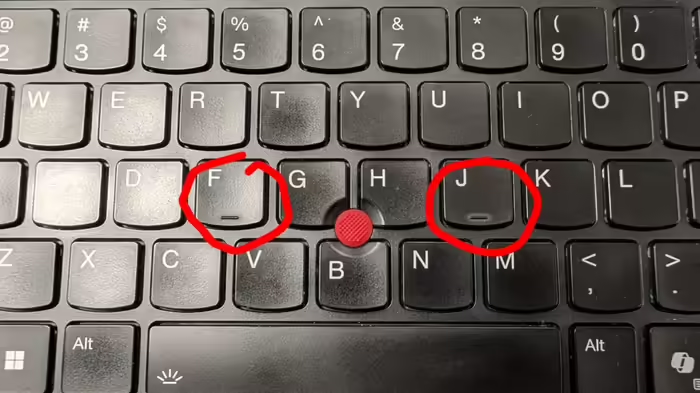
Have you ever noticed the small raised lines or bumps on the F and J keys of your laptop or desktop keyboard? While many users might overlook them, these marks have a very specific purpose and have been patented as far back as 2002.
Guiding Touch Typing
These markings are designed to assist touch typists, helping them position their fingers correctly on the keyboard without looking. The F and J keys serve as the “home row” anchors, where fingers rest during typing. With the help of these tactile guides, users can improve typing accuracy and speed while reducing finger fatigue.
Benefits Beyond Speed
Using these markers, touch typists develop a natural hand posture that reduces strain on the wrists and forearms. Even visually impaired users benefit from these marks, as they can locate the correct keys by touch alone. Regular practice using this technique minimizes errors and allows for faster typing.
Known as “Textile Markers”
The small bumps on the F and J keys are often called textile markers. On a standard QWERTY keyboard, the left index finger rests on F and the right index finger on J. These tactile indicators help typists maintain proper finger placement:
- Left hand: A, S, D, F
- Right hand: J, K, L
The next time someone asks why these keys have marks, you can explain that these small lines are a key innovation in keyboard design, ensuring efficient and accurate typing for everyone.