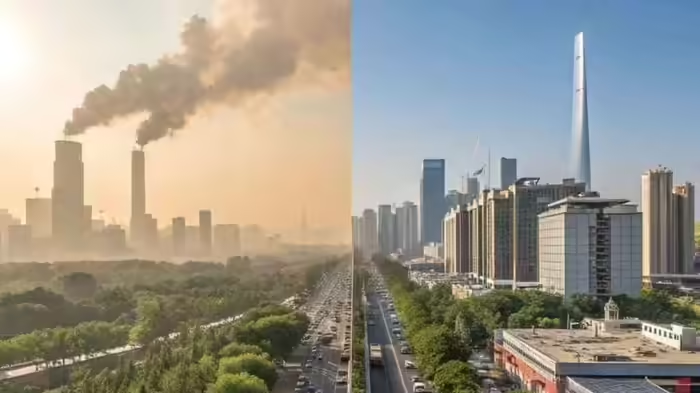
Around 10–15 years ago, China faced a pollution crisis similar to what India experiences today. Through strategic policies and the smart use of technology, China managed to drastically improve its air quality. So, what exactly did China do, and what can India learn from its approach?
The Origins of Pollution in China
China’s pollution problem emerged alongside its rapid economic growth. Following the 1978 economic liberalization, industrialization led to a significant rise in carbon emissions. Much like India, PM2.5 particles became a major contributor to air pollution. According to Indian Express, the main culprits were heavy industries, coal burning, vehicle emissions, power plant chimneys, crop burning, and fertilizer use.
By the time the world’s eyes were on China during the 2008 Beijing Olympics, the government realized the urgency of addressing pollution. Citizens began protesting on the streets, demanding cleaner air.
Promoting Electric Vehicles and Reducing Coal Use
Around 2010, the Chinese government focused heavily on tackling air pollution. It promoted the adoption of electric vehicles (EVs), with Shenzhen becoming a pioneer by converting over 16,000 buses to fully electric by 2017. Between 2013 and 2017, coal consumption was significantly reduced, leading to improved air quality. Reports suggest that since 2013, about 80% of China experienced cleaner air, though there is still room for improvement.
24/7 Monitoring Through Smart Technology
China leveraged modern technology to monitor and control pollution. Thousands of air quality monitoring stations were installed nationwide, continuously tracking air conditions. Satellites and drones were deployed to identify major pollution sources. Artificial Intelligence (AI) and big data were employed to predict pollution trends and pinpoint sources.
Real-time air quality updates were shared with citizens through mobile apps, while factories were equipped with smart sensors to monitor emissions. Any factory exceeding pollution limits triggered instant alerts. Such advanced monitoring systems proved instrumental in controlling pollution.
Lessons for India
India today faces pollution levels similar to China’s in the late 2000s. However, there are key differences. Programs like GRAP in India are reactive, implemented only after pollution spikes, whereas China’s approach is continuous and preventive.
India must also address biomass fuel use in rural areas. By enforcing stricter emission regulations, promoting clean fuels, and expanding public transportation, India could emulate China’s success in curbing pollution and securing cleaner air for its citizens.
Discover more from SD NEWS agency
Subscribe to get the latest posts sent to your email.