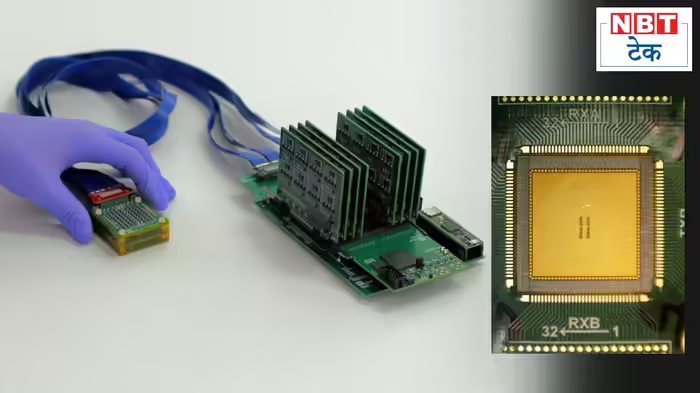
Detecting breast cancer may soon become as simple as checking blood pressure. Scientists at MIT have developed a portable ultrasound device the size of a smartphone, capable of detecting breast cancer both at home and in clinics.
Compact, Affordable, and Accessible
The device, designed by MIT Associate Professor Kanan Dagdeviren and her team, weighs under 500 grams and costs just $300 (approx. ₹25,000). Unlike large, expensive ultrasound machines, this compact tool can easily connect to a laptop to display 3D images. It also consumes very little power and can run on a standard 5V DC adapter or battery, making it particularly valuable for women in remote areas with limited access to medical imaging.
How the Device Works
Traditional ultrasound machines require pressing a probe against the body, which can distort images. The MIT device, however, is gently placed on the skin, generating accurate 3D images of tissue. It can scan up to 15 centimeters deep and can capture breast data from 2–3 positions to ensure precision.
In tests, the device successfully identified cysts and lumps in a 71-year-old female patient without any gaps in detection.
AI Integration and Future Plans
Researchers are now working to make the device even smaller, with the data processing system as tiny as a fingernail, enabling direct connection to smartphones. An AI-based app is also in development to guide users on proper sensor placement. Professor Dagdeviren is preparing to launch a company to bring this technology to the market, aiming to make breast cancer detection as easy as checking your blood pressure at home.
This innovation could revolutionize early cancer detection, particularly in underserved regions, and marks a major step toward affordable, accessible healthcare.
Discover more from SD NEWS agency
Subscribe to get the latest posts sent to your email.