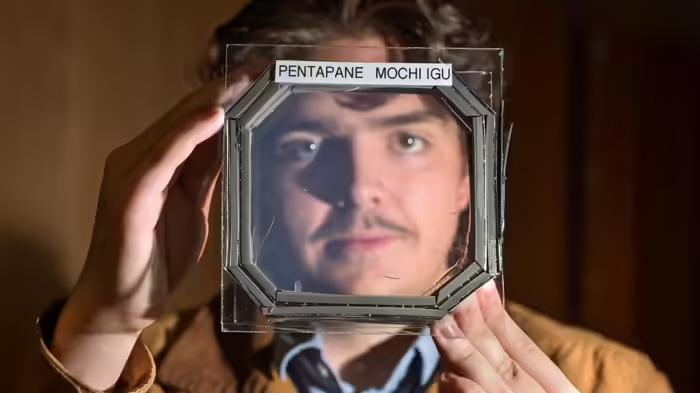
Scientists have developed an innovative material that can significantly reduce your household electricity consumption. This special sheet prevents heat from escaping, meaning you won’t have to repeatedly turn on your room heater.
The Heat-Retaining MOCHI Sheet
Researchers at the University of Colorado Boulder, USA, have created a completely transparent material called MOCHI, designed for windows. MOCHI can effectively block heat transfer, reducing the need to constantly heat buildings. Globally, nearly 40% of total energy is consumed for heating buildings, but a lot of this heat escapes through windows. MOCHI prevents interior heat from leaking out and stops cold air from entering, making it a game-changer in energy efficiency.
A 5-Millimeter Marvel
MOCHI is a silicone-based sheet just 5 millimeters thick. Its structure is similar to bubble wrap, with tiny pipe-like channels much thinner than human hair. Air particles inside these channels collide with the walls instead of each other, halting heat transfer. The sheet is so effective that placing your hand near a heat source behind MOCHI will not burn you.
How MOCHI Works
The material is created using surfactant atoms mixed into a silicone solution. These atoms form thread-like structures, which the silicone coats. After removing the surfactant, air fills the spaces, forming the insulating channels. This unique design blocks heat without affecting transparency.
Maintains Room Aesthetics
MOCHI can be installed as thin sheets or large slabs inside existing windows without compromising the view or natural light. Unlike other insulating films that darken interiors, MOCHI keeps the room bright while maintaining a comfortable temperature. According to scientist Ivan Smalyukh, MOCHI ensures optimal indoor temperatures year-round without wasting energy, and it can even capture solar heat for use inside buildings.
Huge Energy Savings Expected
Currently, MOCHI is in the lab stage, and production is time-intensive. However, the raw materials are inexpensive, and scientists believe large-scale production is feasible soon. Future buildings could look the same from the outside, but energy savings would be substantial, reducing the need for electricity or fuel for heating and cooling.
Discover more from SD NEWS agency
Subscribe to get the latest posts sent to your email.