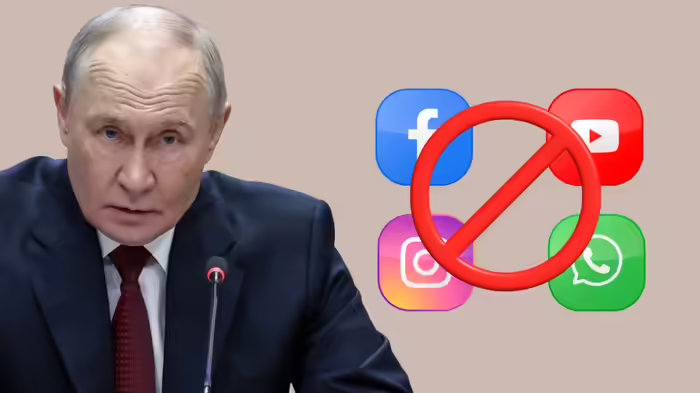
Following its recent ban on Telegram, Russia has now blocked popular American social media platforms, including WhatsApp, Facebook, Instagram, and YouTube. Reports indicate that Russian citizens can no longer access these services as the government pushes users toward state-controlled platforms.
Government Move for “Sovereign Internet”
The Roskomnadzor, Russia’s regulatory authority, has removed the domains of these platforms from the national DNS system, making access impossible. This step is part of the country’s “Sovereign Internet” law, which mandates all internet service providers in Russia to operate through the national DNS system under government oversight.
Scope of the Ban
The restrictions are not limited to social media. Several international media outlets have also been blocked, including BBC, Deutsche Welle, and Radio Free Europe/Radio Liberty. Additionally, the Tor Browser, often used for anonymous browsing, has been blocked, further restricting access to global content.
Reason Behind the Move
Analysts suggest that the Kremlin aims to limit foreign social media platforms and international news sources, consolidating control over online communication and information within Russia. While the government cites security concerns, the ban effectively cuts off Russian residents from many global services and news sources.
Previous Restrictions on Communication Apps
Russia had already restricted certain features of WhatsApp and Telegram, specifically voice and video calling, last year. In December, Apple’s FaceTime and Snapchat were also banned, signaling a continued effort to control digital communication within the country.
Conclusion
This latest crackdown reinforces Russia’s push for a controlled, state-monitored internet, limiting citizens’ access to international social media and news platforms while prioritizing domestic alternatives.
Discover more from SD NEWS agency
Subscribe to get the latest posts sent to your email.