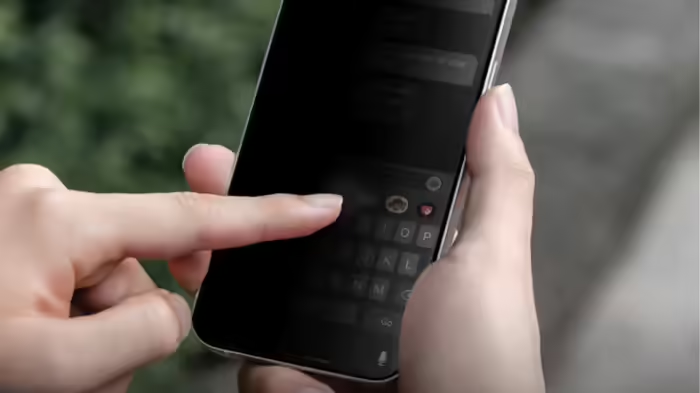
Using a privacy tempered glass on smartphones has become a growing trend, especially among users concerned about screen visibility in public places. However, contrary to popular belief, privacy tempered glass offers far fewer benefits than advertised and can actually damage the overall smartphone experience. Experts now suggest that users should seriously reconsider using it.
Dulls Screen Brightness and Display Quality
Privacy tempered glass works with a darkened filter that restricts side viewing angles. While this may sound useful, the same filter significantly reduces screen brightness and color accuracy. As a result, the display appears dull and lifeless. Users of premium smartphones often fail to enjoy the true quality of high-end AMOLED or OLED displays once a privacy glass is installed.
A Silent Battery Drainer
Because the screen looks darker, users are forced to increase brightness levels, especially while using the phone outdoors. The display is already the most power-consuming component of a smartphone, and higher brightness leads to rapid battery drain. Over time, this excessive power consumption can accelerate battery degradation, reducing the phone’s overall lifespan.
Auto-Brightness Sensor Malfunctions
One of the biggest technical drawbacks is its impact on the ambient light sensor. Privacy tempered glass interferes with the sensor’s ability to detect surrounding light accurately. This often causes auto-brightness to malfunction, leading to sudden dimming or unnecessary brightness spikes—especially annoying while gaming or watching videos.
In-Display Fingerprint Issues
Smartphones equipped with in-display fingerprint sensors are particularly affected. The dark filter makes it harder for the sensor to read fingerprints accurately, resulting in frequent authentication failures. This becomes frustrating during banking, UPI payments, and app logins, significantly hampering day-to-day usage.
Privacy Is Not Fully Guaranteed
Ironically, the very feature these glasses promise—privacy—is also unreliable. Privacy tempered glass typically works only at specific angles. Even a slight shift can make the screen clearly visible to people nearby. This creates a false sense of security, leaving users exposed while believing their data is protected.
Verdict
While privacy tempered glass may seem like a smart accessory, its disadvantages far outweigh its benefits. From poor display quality and battery drain to sensor malfunctions and unreliable privacy, it ultimately degrades the smartphone experience. Users looking for genuine screen protection and better usability are advised to opt for standard high-quality tempered glass instead.
In short, privacy tempered glass is less of a shield and more of a compromise—one that many users would be better off removing immediately.
Discover more from SD NEWS agency
Subscribe to get the latest posts sent to your email.