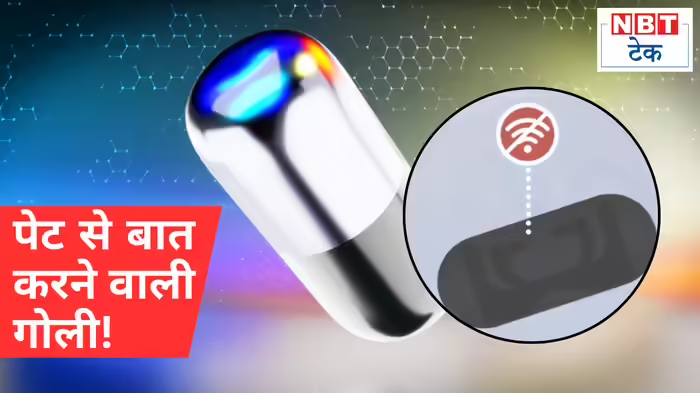
In a groundbreaking development, researchers at the Massachusetts Institute of Technology (MIT) have created a pill embedded with a microchip that can communicate with patients after being ingested. This innovation is expected to benefit patients who require long-term medication, ensuring better adherence and health outcomes.
From Gadgets to Medicine
While chips are common in devices such as smartphones, tablets, and laptops, MIT scientists have now successfully integrated one into a medicine capsule. Once swallowed, the pill signals whether it has dissolved in the stomach, providing real-time confirmation to the patient or healthcare provider. This could be especially helpful for patients with chronic conditions requiring prolonged drug intake.
How the Capsule Works
According to MIT news, the pill contains a biodegradable radio frequency antenna. After the patient swallows it, the chip activates and communicates that the pill has dissolved. Once its function is complete, the antenna naturally exits the body.
Who Will Benefit
Experts suggest that this technology will be particularly valuable for transplant recipients and patients with diseases like HIV and tuberculosis, who must follow strict medication schedules for extended periods.
Versatile Technology
The chip works independently of the type of medication it accompanies. It can be incorporated into any capsule, activating only after the pill reaches the stomach. This ensures universal applicability across multiple treatments.
Expert Insights
Giovanni Traverso, Associate Professor of Mechanical Engineering at MIT and Gastroenterologist at Brigham and Women’s Hospital, explained that the goal is to ensure patients receive the exact therapy they need, improving overall health outcomes.
Addressing Non-Adherence
Non-adherence to prescribed medication is a widespread issue, sometimes with fatal consequences. The MIT team previously developed a pill capable of releasing medication gradually over several days. However, that method is not suitable for all illnesses, making the chip-enabled pill a promising alternative.
About Radio Frequency Communication
Radio frequency (RF) signals allow the pill to communicate its status to external tools. Details about whether patients will need a separate device to receive the signals are still unclear.
The Science Behind the Pill
The pill is made using zinc. Once ingested, the outer layer dissolves in the stomach, activating the chip. Communication between the patient and the pill begins approximately ten minutes after ingestion. While commercialization timelines remain uncertain, this innovation could mark a significant step forward in patient-centric healthcare.
Discover more from SD NEWS agency
Subscribe to get the latest posts sent to your email.