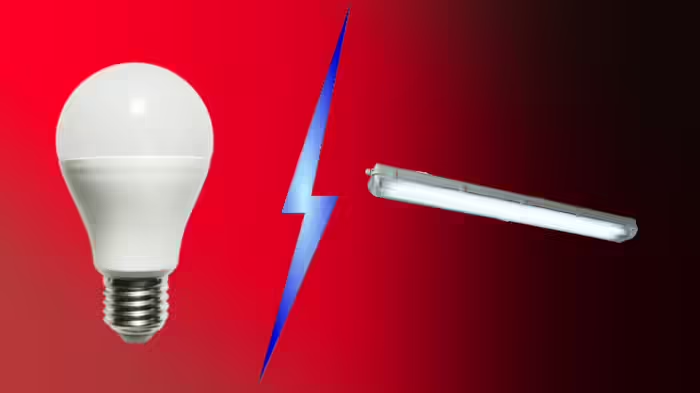
Many consumers remain confused when choosing between an LED bulb and an LED tubelight for their homes. While LED tubelights are usually more expensive than bulbs, they are often perceived to consume more electricity. However, the reality is slightly different. When chosen according to space and requirement, an LED tubelight can actually offer better value and efficiency.
Power Consumption: Bulb vs Tubelight
Both LED bulbs and LED tubelights consume far less electricity than traditional incandescent bulbs or CFLs. However, their wattage and light output differ.
- A standard LED bulb generally consumes 7 to 12 watts.
- An LED tubelight usually consumes 18 to 22 watts.
At first glance, the tubelight appears to use more power. But wattage alone does not determine efficiency—light coverage matters too.
Which Is More Efficient for Your Room?
LED tubelights are long and spread light evenly across a wide area, making them ideal for large rooms, kitchens, and living halls. A single 20-watt LED tubelight can sufficiently illuminate an entire room.
On the other hand, LED bulbs emit light more directionally. To achieve similar brightness in a large space, you may need two or three bulbs. For example, two 7-watt LED bulbs together consume 14 watts, and three would consume 21 watts—often equal to or more than a single tubelight, while still offering uneven lighting.
In such cases, a tubelight provides better illumination with comparable or even lower overall power consumption.
LEDs vs Old-Style Bulbs
Replacing a traditional 60-watt incandescent bulb with a 9-watt LED bulb or a 20-watt LED tubelight can reduce electricity consumption by 80–90 percent. Both LED bulbs and tubelights have a long lifespan of 25,000 to 50,000 hours, which translates to 10–15 years of use under normal conditions.
Unlike older tube lights or CFLs, LEDs produce very little heat, helping keep room temperatures stable. They also contain no toxic gases, making them safer for both homes and the environment.
Price Comparison
LED bulbs are generally more affordable, costing around ₹100–200, while LED tubelights range between ₹200–400. Although tubelights are slightly costlier upfront, they often eliminate the need for multiple bulbs in larger spaces, resulting in lower long-term expenses.
Final Verdict
- Choose an LED tubelight for large rooms where wide and uniform lighting is required.
- Choose an LED bulb for small rooms, bedside lamps, or focused lighting needs.
When selected wisely, both options are energy-efficient, long-lasting, and cost-effective—but for larger spaces, an LED tubelight often delivers more light at a better overall value.
Discover more from SD NEWS agency
Subscribe to get the latest posts sent to your email.