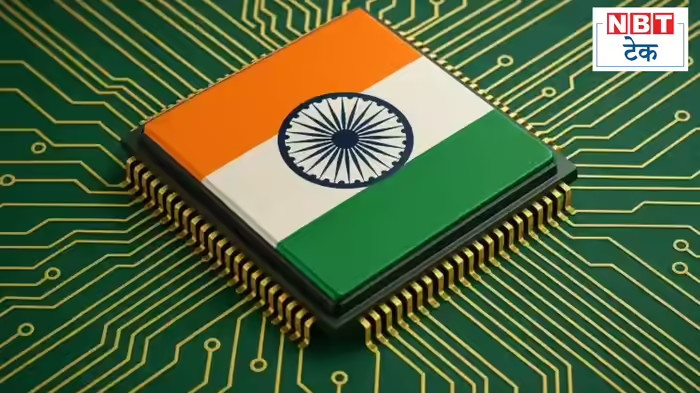
In a major announcement in the Union Budget 2026, the Modi government has launched India Semiconductor Mission 2.0, allocating a massive ₹40,000 crore to strengthen the country’s semiconductor ecosystem and position India as a global chip manufacturing and design hub. The move is being seen as a strategic step to compete with manufacturing giants like China and Vietnam in advanced technologies, including artificial intelligence (AI) and semiconductor production.
Focus on Manufacturing and Design
Unlike earlier initiatives that focused largely on manufacturing, Semiconductor Mission 2.0 places equal emphasis on chip design and talent development. The government aims not only to produce chips domestically but also to equip young engineers with the capability to design cutting-edge semiconductors within India.
The allocated funds will be used to build semiconductor fabrication infrastructure, strengthen supply chains, and improve access to critical raw materials and advanced manufacturing equipment. Officials believe the initiative could significantly reduce India’s dependence on imports while boosting exports of electronics.
Boost to Electronics Industry
The mission is expected to make India-manufactured smartphones, laptops, and other electronic devices more affordable over time. With a stronger domestic semiconductor base, production costs could decline, potentially turning India into a major exporter of consumer electronics.
Experts compare the scale of ambition to digital public infrastructure projects like UPI and DigiLocker, which transformed accessibility and inclusion in the tech ecosystem. Semiconductor Mission 2.0 is expected to bring similar democratization to high-end technology.
AI Education Expansion Across Universities
A key pillar of the plan is talent creation. According to reports, students in over 315 universities are already engaged in chip design programs. The government now plans to expand this model to AI, launching specialized AI courses in 500 universities nationwide.
The long-term goal is to build a robust national talent pool and develop a common compute stack, ensuring advanced technology infrastructure is not monopolized by a handful of global corporations but remains accessible to a broader ecosystem.
Consumer Benefits: Cheaper Batteries and Appliances
Budget measures linked to the semiconductor push are also expected to benefit consumers directly. Reports suggest that batteries for mobile phones and electric vehicles may become cheaper, potentially easing smartphone price pressures driven by rising component costs. Larger battery capacities in future devices are also anticipated.
Additionally, household appliances such as microwave ovens are likely to become more affordable, offering relief to middle-class consumers.
Discover more from SD NEWS agency
Subscribe to get the latest posts sent to your email.