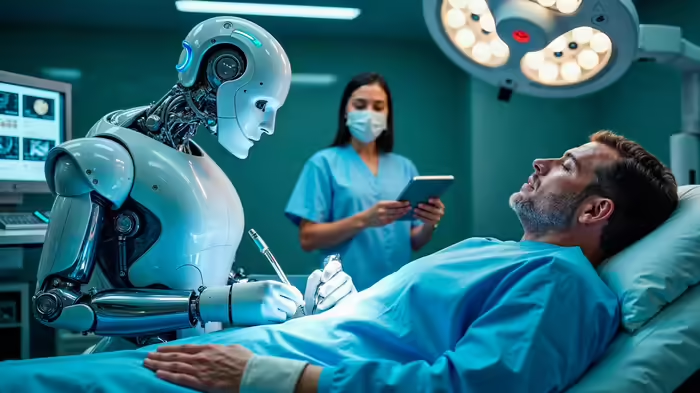
Greater Noida: In a major milestone for India’s healthcare system, the country’s first government-run Artificial Intelligence (AI) clinic has been inaugurated at the Government Institute of Medical Sciences (GIMS), Greater Noida. Launched on January 4, 2026, the clinic aims to revolutionize early diagnosis and treatment of life-threatening diseases such as cancer, heart ailments, kidney and liver disorders, marking a significant step toward technology-driven public healthcare.
The AI clinic integrates artificial intelligence with genetic screening to analyze blood tests, medical scans, imaging reports, and clinical data. By using advanced algorithms, the facility can detect diseases at an early stage, assess treatment outcomes, and monitor patient recovery more effectively. Health experts see this initiative as a game changer, particularly in improving diagnostic accuracy and reducing delays in treatment.
AI to Enhance Imaging and Diagnostics
According to Brigadier Dr. Rakesh Kumar Gupta, Director of GIMS, the clinic uses AI-powered tools to analyze X-rays, ultrasounds, CT scans, MRI reports, and laboratory investigations. These tools can identify fractures, lung nodules, and even very small tumors that may be difficult to detect with the naked eye. Early detection significantly improves survival rates, especially in cases of cancer and cardiovascular diseases.
AI-driven imaging also helps doctors prioritize critical cases during emergencies, reducing patient waiting time and improving overall treatment outcomes.
Boost to Radiology and Pathology
Experts note that AI can increase a radiologist’s efficiency by up to 40 percent by rapidly analyzing large volumes of imaging data. This allows specialists to focus more on complex cases and clinical decision-making.
In pathology, AI-assisted digital analysis automates tissue examination and identifies disease patterns that human eyes may overlook. This not only reduces processing time but also minimizes the risk of diagnostic errors, leading to more reliable results.
Early Cancer Detection and Continuous Monitoring
One of the clinic’s key strengths is its ability to detect early-stage cancers, including breast lumps and lung nodules, with greater accuracy than conventional methods. Deep learning models help reduce false positives and negatives, enabling timely and precise interventions.
Additionally, AI-enabled wearable devices and mobile applications are used to continuously monitor vital parameters such as heart rate, blood pressure, and blood sugar levels. Any abnormality triggers real-time alerts to caregivers and doctors, helping prevent complications and reducing hospital readmissions.
A Step Toward Accessible Healthcare
The AI clinic model is expected to play a crucial role in extending quality healthcare to rural and underserved regions, where access to specialist doctors is limited. Officials also believe this initiative will open new opportunities for healthcare startups and innovation in India’s medical technology ecosystem.
With the launch of this pioneering AI clinic, India has taken a decisive step toward future-ready, technology-driven public healthcare, setting a precedent for similar facilities across the country.
Discover more from SD NEWS agency
Subscribe to get the latest posts sent to your email.