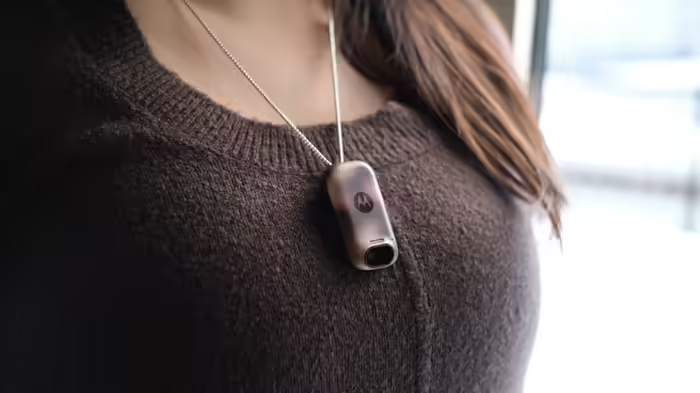
Motorola has entered the race to develop AI-powered wearable devices. At CES 2026, the company unveiled a concept device that resembles a pendant, designed to be worn around the neck. The gadget features no screen or buttons, yet it can understand its surroundings, provide suggestions, and autonomously perform certain tasks.
The Rise of AI Wearables
In recent years, tech companies have been striving to create AI companions that not only complement smartphones but also simplify everyday life. Several products have already reached the market, while others are still in development. Motorola now joins this growing sector, showcasing its new wearable AI concept at the private Lenovo World Tour.
How Motorola’s AI Wearable Works
The device operates on Motorola’s AI assistant, QIRA. According to Mashable India, the pendant can recognize objects around the user, explain their context, and condense long-form content into concise summaries. Beyond offering suggestions, the AI can take independent actions. In a demo, it successfully unlocked a phone and booked a cab without manual intervention.
Design and Features
The device resembles a sleek locket, featuring a minimalist and elegant design. Its pearl-like body has smooth edges and hangs from a thin chain. The Motorola logo is embedded in the center, accompanied by a small camera lens and sensors. Instead of a traditional screen or buttons, the pendant incorporates a speaker and microphone to interact with users seamlessly.
Challenges and Expectations
While Motorola’s AI wearable looks promising, previous devices in this category have faced challenges. Humane’s AI Pin, for instance, failed commercially due to high cost and limited functionality, while the Friend Necklace faced plagiarism allegations. Motorola acknowledges these hurdles, describing its device as an experimental concept that may take significant time before reaching the market.
Other Players in AI Wearables
OpenAI is also reportedly developing its first AI device, codenamed Gumdrop. The device is expected to be compact, similar in size to an iPod Shuffle or a pen, without screens or buttons, and designed to be worn like other AI wearables.
Conclusion
As tech companies compete to create intelligent, wearable AI companions, Motorola’s pendant-style device highlights a shift toward integrating AI into everyday life in elegant, unobtrusive forms. While still a concept, it represents the future of personal AI assistants—portable, intuitive, and seamlessly integrated into the user’s environment.
Discover more from SD NEWS agency
Subscribe to get the latest posts sent to your email.