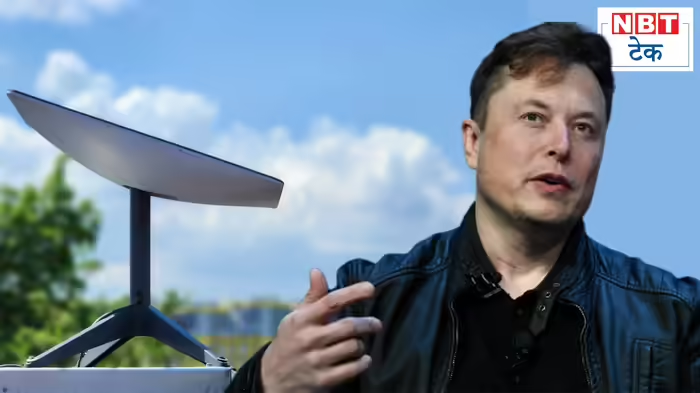
Elon Musk has once again stirred debate by attributing the delay in launching Starlink in South Africa to his race. In a recent social media post, Musk claimed that his satellite internet service has not received approval in South Africa because he is white, pointing to the country’s laws designed to favor historically marginalized communities.
What Musk Said
Musk, whose birth country is South Africa, previously shared a clip from his interview at last year’s Qatar Economic Forum on his X (formerly Twitter) account. He highlighted that South Africa has nearly 140 laws giving opportunities specifically to Black citizens, suggesting that individuals from other racial groups face barriers. According to him, this is why Starlink has not yet been authorized in the country.
The Other Side of the Story
However, reports by BBC and other outlets indicate a different reality. Starlink had not even applied for a license to operate in South Africa until last year. The South African Ministry of Foreign Affairs stated that the company could legally operate in the country once it complied with local regulations.
South African Licensing Rules
South African law requires that any network operator, including Starlink, obtain a network license before providing services. One key requirement is that 30% of the company’s shares must be held by historically disadvantaged communities, primarily Black South Africans. Only then can the service be authorized to operate commercially.
How Satellite Internet Works
Satellite internet differs from traditional broadband or mobile internet. It delivers connectivity via satellites in low Earth orbit, which beam signals to a Starlink dish installed at homes or offices. These signals are then converted by a modem or router to provide internet access indoors.
Starlink in India
Starlink has already received approval to operate in India, having agreed to comply with local regulations. Trials are expected to begin soon, with the service anticipated to launch officially in 2026. While promising, satellite internet remains more expensive compared to conventional broadband or mobile networks.
Conclusion
While Musk has cited his race as a factor, the regulatory framework in South Africa appears to be the primary reason for the delay. Compliance with licensing rules that empower historically disadvantaged communities is central to Starlink’s eventual rollout in the country.
Discover more from SD NEWS agency
Subscribe to get the latest posts sent to your email.