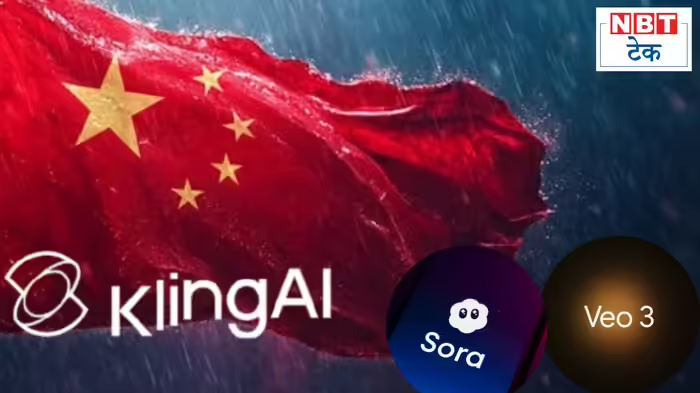
Chinese tech giant Kuaishou’s Kling AI has quickly become one of the biggest competitors to OpenAI’s Sora and Google’s Veo in the AI video generation space. Since its launch in June 2024, Kling has steadily gained traction and is now ranked among the top-tier video generation tools alongside Sora and Veo.
AI Video Creation Trend Gains Momentum
AI-powered video creation has become a crucial tool for content creators globally. Kuaishou’s Kling platform is providing strong competition to established AI video editing tools such as Google’s Veo and OpenAI’s Sora. Within just a short period, Kling has secured a spot in the list of leading AI editing platforms. Since its launch, the platform has amassed approximately 12 million monthly active users and annual revenue has reached around $24 million.
Shifting Rankings in Video Generation Benchmarks
AI video generation benchmarks are evolving rapidly. Kling has already established itself in the top tier alongside Veo and Sora. Popular trends, such as alien invasions or live-streaming digital humans, have become common, highlighting the platform’s advanced capabilities. According to recent data, Kling’s revenue exceeded $20 million in December 2024 alone, pushing its total annual earnings to $140 million. By January 2025, its daily average revenue had increased by approximately 30% compared to the previous month.
Three Key Factors Behind Kling’s Success
Kuaishou states that Kling represents a modern avatar of the generative AI era. In April 2025, the company established a separate business unit exclusively for the platform. During last year’s earnings calls, executives repeatedly emphasized Kling’s growing user base and revenue.
According to Zeng Yushen, Head of Operations at Kling, the platform’s success is driven by three main factors:
- Advanced AI Models – Kling’s foundational models underwent seven major upgrades last year, including the Kling O1, the industry’s first unified multimodal video model capable of editing images, videos, subjects, and text from a single prompt, with on-the-fly post-production editing.
- Robust Interactive Design – Features like Kling 2.6 significantly improved audio generation capabilities, while tools like Motion Control allow uploaded subjects to mimic movements from reference videos, spawning viral trends like “Dancing Puppies.”
- Creator and Enterprise Ecosystem Integration – Kling integrates DeepSeek models to assist with prompt generation and offers a Smart Canvas feature that unites generation and editing in a single workspace with real-time collaboration.
Focus on Creators and Enterprise Customers
Kling primarily targets professional creators and enterprise clients. Shanghai-based film producer Zhong Zhong noted that while she currently prefers Sora 2 for pre-production work, Kling’s features and interactive capabilities make it a strong contender in the AI video space.
With its rapid adoption and continuous upgrades, Kling is proving to be a serious challenger to global AI video platforms, marking China’s growing influence in the generative AI industry.
Discover more from SD NEWS agency
Subscribe to get the latest posts sent to your email.