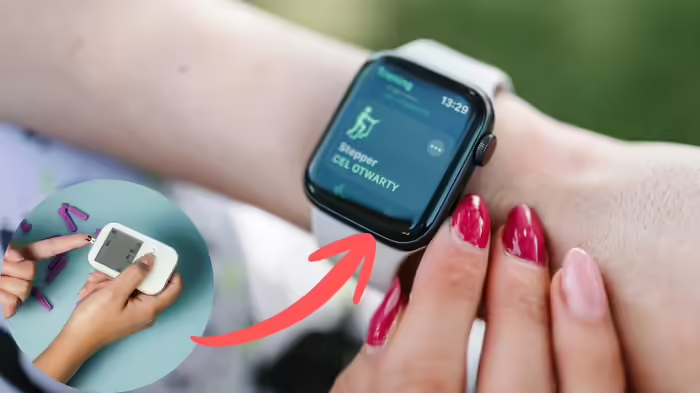
At the World Health Expo (WHX) 2026 in Dubai, researchers have announced a groundbreaking study to test a smartwatch capable of assessing diabetes risk. The study will involve 150 participants, including healthy volunteers, pre-diabetes patients, and known diabetes patients, using the Huawei Watch GT 6 Pro to determine how accurately it can detect elevated blood glucose levels.
Why This Matters
Millions of people worldwide are unaware they are at risk of diabetes. Early detection is crucial to prevent complications and manage the disease effectively. The new smartwatch technology aims to provide a non-invasive, convenient way to alert users to potential blood sugar issues, prompting timely medical consultation.
The Study
The trial, conducted under Dubai Health at Mohammed Bin Rashid University (MBRU), is led by Assistant Professor and endocrinology-diabetes specialist Dr. Mariam Al Saeed. Participants include:
- 50 healthy volunteers
- 50 confirmed diabetes patients
- 50 pre-diabetes patients from Dubai Health hospitals and primary healthcare centers
Special focus is on the pre-diabetes group, whose blood sugar levels fluctuate and who may be unaware of their condition.
How the Smartwatch Works
The Huawei Watch GT 6 Pro uses photoplethysmography (PPG), an optical method that estimates blood glucose levels via light sensors on the wrist. Unlike traditional continuous glucose monitors that require a device under the skin, this smartwatch is minimally invasive and external.
Dr. Al Saeed clarified that the watch will not diagnose diabetes. Instead, it detects elevated glucose levels, signaling users to consult a doctor for formal lab testing.
Accuracy and Comparison
The study will compare smartwatch readings with traditional capillary glucose monitoring, where a small blood sample from a finger prick is tested for accuracy. Huawei had earlier unveiled this diabetes-risk feature at the Huawei Health Strategy and Research Platform event during WHX 2026.
The Need for Early Detection
Dr. Al Saeed emphasized that over 500 million people worldwide live with Type 1 or Type 2 diabetes, often without realizing it. Among pre-diabetic individuals, about two-thirds eventually develop full-blown diabetes, making early detection critical.
Conclusion
This innovative use of smartwatches could transform diabetes monitoring by providing a fast, non-invasive, and easily accessible early warning system, helping millions identify risks before the disease progresses.
Discover more from SD NEWS agency
Subscribe to get the latest posts sent to your email.