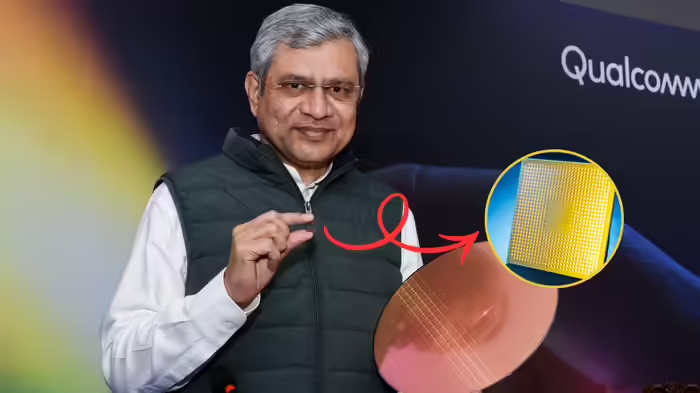
Qualcomm has successfully designed a 2nm (nanometer) chip at its engineering centers in Bengaluru, Chennai, and Hyderabad, a milestone witnessed by Union Minister Ashwini Vaishnaw. Experts say this achievement could propel India to the forefront of the semiconductor industry. The 2nm chip, among the most advanced globally, is expected to power technologies ranging from artificial intelligence to everyday gadgets.
What Makes the 2nm Chip Special?
The 2nm chip represents next-generation semiconductor technology with extremely high transistor density. Large-scale production is expected to begin later this year. Early claims suggest devices using this chip could consume up to 45% less energy while delivering better performance compared to current 3nm and 5nm chipsets. Its applications span AI servers, smartphones, and IoT (Internet of Things) devices. Premium smartphones, including the iPhone 18 series and Google’s upcoming Pixel models, are likely to be among the first to adopt this chip.
Samsung’s S26 Series May Also Feature the Chip
Rumors indicate that Samsung’s upcoming Galaxy S26 series could incorporate the 2nm process in its Exynos 2600 processor. Beyond smartphones, the chip promises efficiency for AI servers, data centers, and energy-intensive AI applications.
Is Qualcomm Alone in Developing the 2nm Chip?
Qualcomm is not the only player. Other industry giants such as TSMC (N2 process), Samsung, Intel, and IBM are also working on 2nm technology.
Why Is This Milestone Significant for India?
Developing the 2nm chip in India demonstrates the country’s growing prowess in product design and engineering. According to Minister Ashwini Vaishnaw, such achievements showcase India’s advanced design ecosystem. With the global semiconductor race intensifying, this positions India as a serious contender. The “tape-out” stage mentioned refers to the final phase of chip design, marking the completion of the engineering blueprint.
How Could This Transform India’s Future?
India is emerging as a global hub for manufacturing. With this success, the country could also become a major center for product design. As semiconductors increasingly define technological leadership worldwide, India’s advancement in this sector could place it alongside the U.S. and China, enhancing the credibility and global recognition of Indian talent.
Discover more from SD NEWS agency
Subscribe to get the latest posts sent to your email.