
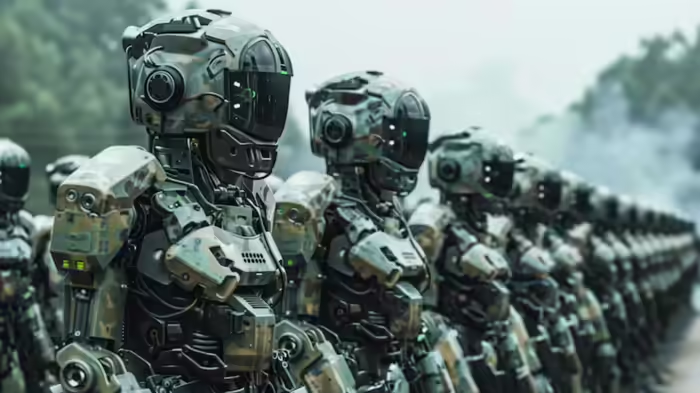
The nature of modern warfare is rapidly changing, and after China, the United States has now taken a major step toward deploying a robot army. A San Francisco–based robotics company is working at full speed to develop 50,000 humanoid robots that could one day replace human soldiers in high-risk military operations.
50,000 Robots by 2027
According to reports by Interesting Engineering and Forbes, the company plans to manufacture 40 robots in 2025, scale up to 10,000 units in 2026, and reach a total of 50,000 robots by the end of 2027. Initially, the target was much smaller, but growing global competition—especially after China’s similar plans—has accelerated the project.
The humanoid robots, named Phantom MK-1, are designed not only for factory and industrial tasks but also for battlefield missions.
Powerful Design for Dangerous Missions
The Phantom MK-1 stands about 5 feet 9 inches tall and weighs approximately 175–180 pounds. These robots are built specifically for high-risk operations, such as:
- Enemy surveillance and reconnaissance
- Bomb detection and deactivation
- Entering hazardous or hostile zones before human troops
In combat scenarios, these robots will be deployed ahead of human soldiers, reducing the risk to human life.
Advanced Technology with Human Control
Unlike traditional military robots loaded with expensive sensors, the Phantom MK-1 relies primarily on camera-based systems, allowing faster data integration and reliable performance in complex environments. The robots are equipped with advanced actuators that provide high strength, low noise, and safe operation around humans.
Importantly, these robots will not make autonomous kill decisions. Any use of weapons will remain strictly under human operator control, ensuring that critical decisions stay in human hands.
Business Model and Cost Efficiency
The company will not sell the robots outright. Instead, they will be leased at an annual cost of around $100,000 per robot (approximately ₹90 lakh). Since a single robot can work continuously without fatigue, it can potentially replace multiple human workers or soldiers, significantly reducing long-term costs.
Strategic Concerns and Global Impact
While robot armies promise to reduce casualties, experts warn that lower risks to soldiers could make war decisions politically easier, raising serious ethical and strategic questions.
China had earlier announced plans to deploy robots along the Vietnam border, signaling a shift in global military strategies. With the US now following a similar path, discussions around the future of warfare have intensified worldwide.
As technology advances, the era of robot-led combat operations may no longer be science fiction. The day may not be far when robot armies, not human soldiers, dominate the battlefield, reshaping the very concept of war.
Discover more from SD NEWS agency
Subscribe to get the latest posts sent to your email.