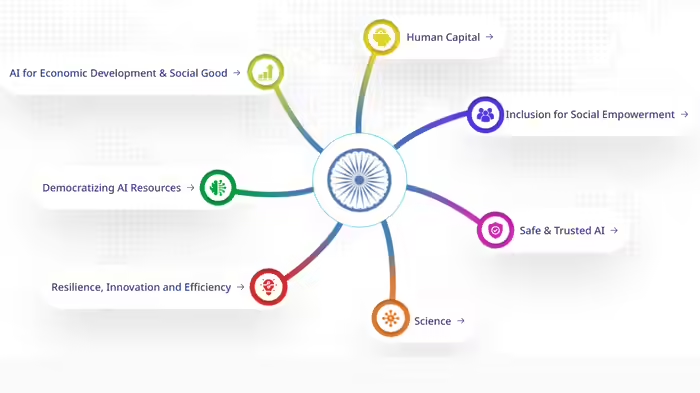
During the India AI Impact Summit, 84 countries and 2 international organizations signed the New Delhi Declaration, a landmark agreement aimed at ensuring that artificial intelligence (AI) benefits the broader public rather than being limited to wealthy nations. The summit emphasized affordable access, safe usage, skill development, and the use of AI to improve education, healthcare, and other public services.
Democratizing AI Resources
Historically, AI has favored countries with vast data and expensive computing infrastructure. The New Delhi Declaration calls for democratizing AI resources, highlighting that digital infrastructure and affordable connectivity are rights for every nation. A voluntary framework, “Charter for the Democratic Diffusion of AI,” was proposed to allow countries to develop AI according to their specific needs.
Global AI Model Library
The summit proposed a shared platform where countries can showcase successful AI models and use cases. Other nations can adapt these solutions, reducing duplication of effort and research costs. Promoting open-source AI will give smaller and developing countries the opportunity to adopt cutting-edge technology.
Secure and Trusted AI
A special focus was on “Secure and Trusted AI.” The summit proposed a collaborative platform called Trusted AI Commons, which will provide tools, standards, and best practices related to AI security. The goal is to ensure AI development aligns with public welfare, emphasizing that technology cannot thrive without trust.
AI for Scientific Research
Recognizing that many countries lack robust research infrastructure, the summit proposed the International Network of AI for Science Institutions. This network will connect scientific organizations worldwide, accelerating research in areas from disease treatment to climate change mitigation through AI-powered solutions.
Social Empowerment
AI will be leveraged to empower vulnerable communities. Solutions will improve access to education, healthcare, and government services. For example, rural citizens can interact with AI systems in their native language to access information about government programs, reducing bureaucratic hurdles and improving service delivery.
Jobs and Skill Development
Rather than viewing AI as a threat to employment, the summit highlighted opportunities it creates. Emphasis was placed on human capital development, including skilling, reskilling, and upskilling programs. A framework, Guiding Principles for Reskilling, and a playbook will help prepare youth and workers for AI-driven workplaces.
Environmentally Responsible AI
Running AI systems requires significant energy and resources. The summit stressed the development of energy-efficient and sustainable AI systems. A Resilient AI Infrastructure playbook was proposed to ensure technological progress occurs without harming the environment, balancing innovation with sustainability.
Key Takeaways
The India AI Impact Summit sent a clear message: AI is a technology of the future, but it must advance through equity, collaboration, and inclusivity. By combining resource sharing, security, research collaboration, social empowerment, and skill development, the New Delhi Declaration aims to ensure that the benefits of AI reach as many people worldwide as possible.
Discover more from SD NEWS agency
Subscribe to get the latest posts sent to your email.