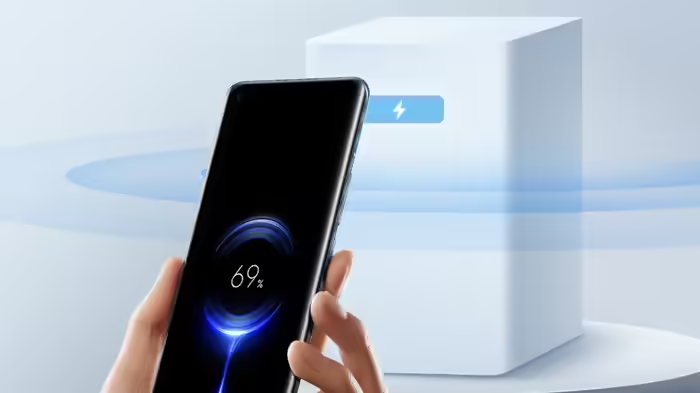
Imagine walking through an airport or shopping mall while your phone charges automatically—no cords, no chargers, no interruptions. While this may sound like science fiction, researchers have already developed a technology that could transform the way we charge our devices in the future.
The Limitations of Current Wireless Charging
Today’s wireless chargers are not truly wireless. They still require a wired connection to a power source, and your device must be placed precisely on the charging pad. Misalignment can result in slow charging or no charge at all.
A Revolutionary Wireless Charging Technology
Scientists at Sejong University, South Korea, have developed a “Distributed Laser Charging” system that can wirelessly charge devices up to 30 meters (approximately 100 feet) away.
The system works using infrared light, which safely transmits power without harming surrounding objects. It has two main components:
- Transmitter – sends the infrared energy.
- Receiver – a tiny 10-square-millimeter photovoltaic cell embedded in the device, which converts the infrared light into electrical power.
Current Capabilities and Potential
Currently, this technology can deliver 400 milliwatts of light power, sufficient to charge IoT devices and small sensors. The photovoltaic cell converts the light to 85 milliwatts of electricity. Researchers are working to increase this efficiency for larger devices such as smartphones and laptops.
What the Future Holds
Once fully developed, this technology could allow phones, laptops, tablets, and other devices to charge continuously without being physically connected to a charger. Multiple transmitters installed in homes, offices, and public spaces could keep devices powered at all times, eliminating the need for cables and reducing charging-related stress.
This innovation could redefine convenience in the digital era, making low-battery anxiety a thing of the past and bringing a truly wireless lifestyle closer to reality.
Discover more from SD NEWS agency
Subscribe to get the latest posts sent to your email.