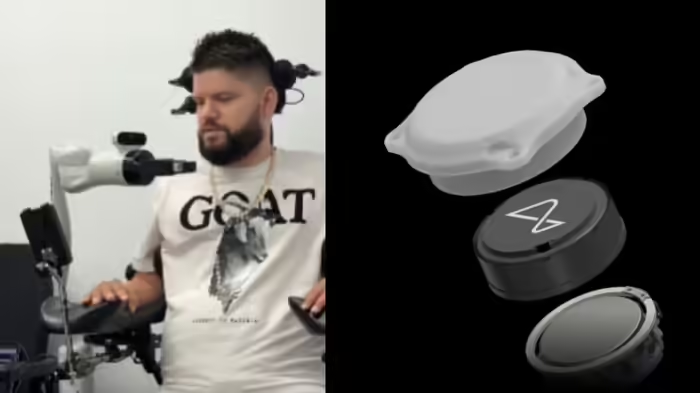
Imagine lying in bed, unable to move your hands or legs due to paralysis, yet being able to perform every action an able-bodied person can—simply by thinking about it. This is no longer science fiction. Elon Musk’s company Neuralink has recently released a video showcasing this revolutionary technology, which is now going viral.
Mind-Controlled Robotic Arm
The video shows a patient with paralysis controlling a robotic arm through a brain implant, performing tasks like picking up objects and eating with a spoon—just like anyone else. Posted on Neuralink’s X account, the clip has already been viewed over 15 million times within hours.
This breakthrough is part of Neuralink’s PRIME study, which involves a tiny chip called N1 implanted in the patient’s brain. The chip contains 1,024 electrodes, functioning like thousands of miniature microphones that pick up the brain’s signals. These signals are transmitted wirelessly to a computer, which in turn controls the robotic arm.
The Role of AI
The human brain sends extremely complex signals. For instance, thinking “raise my hand” triggers millions of neuron signals simultaneously, akin to multiple radio channels playing at once with a lot of noise. Neuralink’s AI deciphers these patterns, isolating the intended command.
Elon Musk explains that this AI system functions similarly to Tesla’s Autopilot technology, using neural networks that continuously learn and improve over time through machine learning. The more the patient uses it, the smarter and more accurate the system becomes.
Neuralink’s Breakthrough
The AI interprets brain patterns and sends precise instructions to the robotic arm. This technology has the potential to revolutionize medical science, offering hope to millions suffering from ALS, spinal injuries, or paralysis. Experts are hailing it as a significant leap in assistive technology.
Social media reactions have been enthusiastic. One user wrote: “This is like the beginning of Iron Man. Paralyzed patients will soon be able to move freely.”
Beyond Robotic Arms: The Future
Neuralink aims to go beyond robotic limbs. Future possibilities include:
- Mind-controlled cars
- Music playback through thought
- Recording dreams
The company plans to implant thousands of devices by 2026, though the cost per implant has not been officially disclosed.
Bottom Line: Neuralink’s brain-computer interface is turning science fiction into reality, offering unprecedented independence to people with paralysis and signaling a new era in neurotechnology.
Discover more from SD NEWS agency
Subscribe to get the latest posts sent to your email.