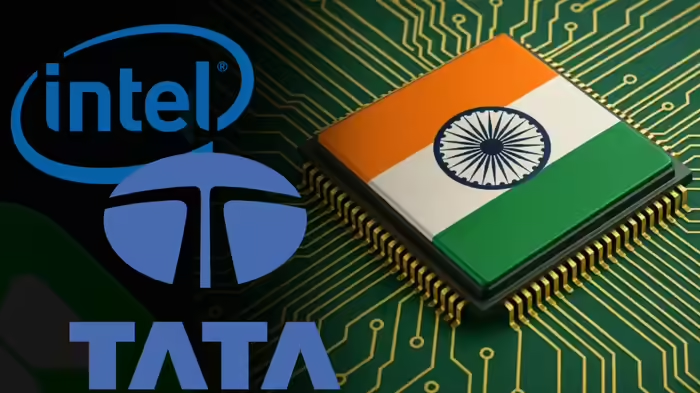
India’s self-reliance mission in semiconductor manufacturing has taken a giant leap forward as Tata Electronics emerges as Intel’s first major customer for its new chip production initiative. Valued at $14 billion, Tata is set to establish two large semiconductor factories in India, marking a significant milestone under the India Semiconductor Mission.
Tata Electronics’ Mega Factories
Tata Electronics is planning a chip manufacturing plant in Gujarat and a chip assembly and testing facility in Assam. Intel will leverage these factories for AI chip production, providing design technology while Tata handles manufacturing. This collaboration positions India as a key player in AI-driven computer hardware, reducing reliance on imports and boosting domestic production capabilities.
Impact on the Market
Currently, India imports the majority of its computer chips. With the government’s semiconductor mission and Tata’s upcoming factories, the country is on track to become self-reliant in chip production. Analysts predict that with global companies seeking alternatives to China for their supply chains, India could become a crucial hub for semiconductor manufacturing.
Intel CEO Lip-Boo Tan said, “India is rapidly becoming one of the world’s largest computer markets, especially for AI-enabled machines. This partnership will benefit both companies.” Tata Electronics CEO Randhir Thakur added, “This collaboration will also benefit customers—products will reach the market faster, costs will decrease, and cutting-edge technology will become available sooner.”
Boost for India’s Semiconductor Mission
Despite high electronics consumption, India has historically lagged in domestic chip production. The India Semiconductor Mission aims to change that, already approving more than ten projects. Tata and Intel’s partnership strengthens both the private and public sectors, potentially positioning India among the top five computer markets globally in the near future.
This landmark deal signals a new era for India’s tech industry, offering faster access to AI-enabled computers, reduced costs for consumers, and a stronger domestic semiconductor ecosystem.
Discover more from SD NEWS agency
Subscribe to get the latest posts sent to your email.