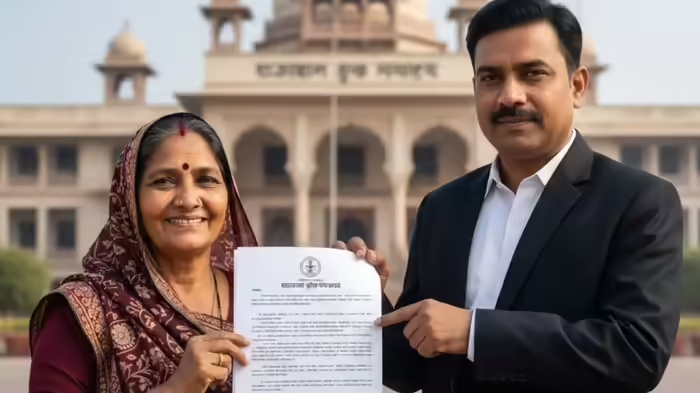
In a significant and precedent-setting judgment, the Rajasthan High Court has ruled that a woman married under the traditional nata system is legally entitled to receive family pension after the death of her husband. Recognising nata marriage as a socially valid and legally acceptable form of union in Rajasthan, the court rejected the objections raised by the pension department and directed that the widow be granted all pensionary benefits.
The ruling is being widely seen as a major boost for women’s rights and a balanced recognition of social customs within the constitutional framework.
Case Background
The case pertains to Ram Pyari Suman, who had married the late Sai Lal Saini under the nata marriage system, a long-standing social tradition prevalent in parts of Rajasthan. Sai Lal Saini was a retired government employee. After his death, Ram Pyari applied for family pension. However, the concerned department refused to sanction the pension, arguing that her name was not officially recorded as the wife in government service records.
Aggrieved by the denial, Ram Pyari approached the Rajasthan High Court, seeking justice and recognition of her marital status for the purpose of pensionary benefits.
Government’s Objections vs Petitioner’s Stand
The pension department contended that Ram Pyari could not be treated as the legally wedded wife of the deceased employee and, therefore, was not eligible for family pension.
On the other hand, counsel for the petitioner argued that nata marriage is a socially accepted and long-recognised custom in Rajasthan and cannot be declared illegal. It was further submitted that the deceased employee had acknowledged Ram Pyari as his wife during his lifetime and that the couple had lived together for several years as husband and wife without any legal or criminal dispute.
Court Recognises ‘Nata’ Marriage as Valid
After hearing both sides, Justice Ashok Kumar, presiding over a single-judge bench, observed that nata marriage is not an illegal relationship but a socially sanctioned institution rooted in local customs.
The court noted that there was no legal or criminal dispute regarding the marital relationship between the woman and the deceased employee. It held that ignoring such a socially recognised marriage would amount to denying ground realities and would cause undue hardship to a dependent widow.
Pension Rules Cited, Verdict in Favour of the Widow
Referring to the Rajasthan Civil Services (Pension) Rules, 1996, the court подчерк emphasised that the primary objective of family pension is to provide financial security to the dependents of a deceased employee.
The bench ruled that a woman married under a socially valid custom cannot be deprived of this right merely because her name was not reflected in official records. Denying pension in such a case, the court said, would be contrary to both social justice and constitutional principles.
Clear Directions to the Department
Rejecting the objections of the pension department, the High Court issued clear directions to grant family pension to Ram Pyari Suman without further delay.
The court underlined that constitutional rights cannot be overridden by narrow administrative interpretations and that social traditions, when not illegal or unconstitutional, deserve due legal recognition.
A Milestone Judgment
The verdict is being hailed as a landmark decision for women married under nata and similar customary practices. It strengthens the legal rights of such women and sets an important precedent for future cases involving pension, inheritance and social security benefits.
Legal experts say the ruling reflects a progressive balance between constitutional values and deeply rooted social customs, ensuring that widows are not left destitute due to technical or bureaucratic hurdles.
Discover more from SD NEWS agency
Subscribe to get the latest posts sent to your email.