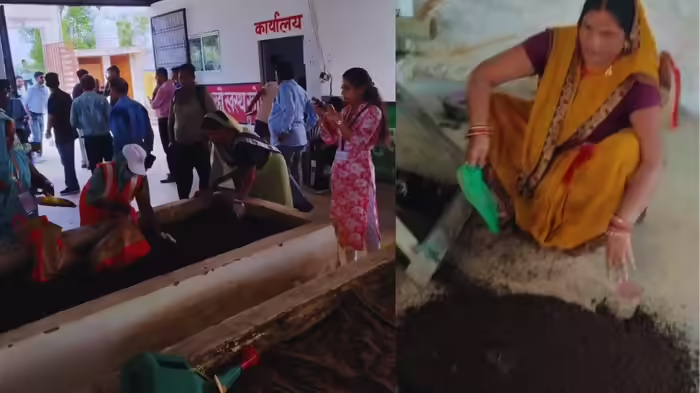
Lucknow: The Bakkas Gram Panchayat in the Gosainganj development block of Lucknow has emerged as a remarkable example of rural transformation under the Swachh Bharat Mission. By converting waste into valuable resources, the village has achieved the ODF Plus status and generated ₹1,16,850 through scientific waste management—a model now inspiring the entire state.
Door-to-Door Collection Boosts Revenue
The panchayat introduced a structured system for door-to-door waste collection using e-rickshaws and bicycles. Each household contributes a nominal ₹30 per month as a user charge, through which the village has collected ₹84,600 so far.
The collected waste is segregated at the Resource Recovery Centre, where vermi-compost is prepared. The sale of this organic compost in the market has yielded an additional ₹32,250, turning waste into a sustainable income source.
Scientific Management of Solid and Liquid Waste
To ensure efficient waste treatment, the panchayat constructed vermi compost pits, compost pits, and NADEP pits for solid waste.
For liquid waste, silt catchers and filter chambers were installed in drains and water bodies.
This scientific approach has eliminated waterlogging and removed garbage dumps from village streets. With strong community participation, cleanliness has now become the identity of Bakkas.
Employment Generation and Local Self-Reliance
The waste management system has created nine local jobs, spanning waste collection, segregation, compost production, and sales. This economic chain is helping the village move towards financial self-reliance while providing livelihood opportunities to residents.
State Leaders Applaud the Initiative
Panchayati Raj Minister Om Prakash Rajbhar praised the initiative, stating:
“Bakkas Gram Panchayat has set a new benchmark by linking waste management with income generation. Such efforts will give a new direction to the Swachh Bharat movement and make gram panchayats self-reliant.”
Panchayati Raj Director Amit Kumar Singh added:
“The Bakkas model proves that with proper planning, technology, and community support, revolutionary change is possible at the rural level. The department is preparing to replicate this model across Uttar Pradesh.”
Discover more from SD NEWS agency
Subscribe to get the latest posts sent to your email.