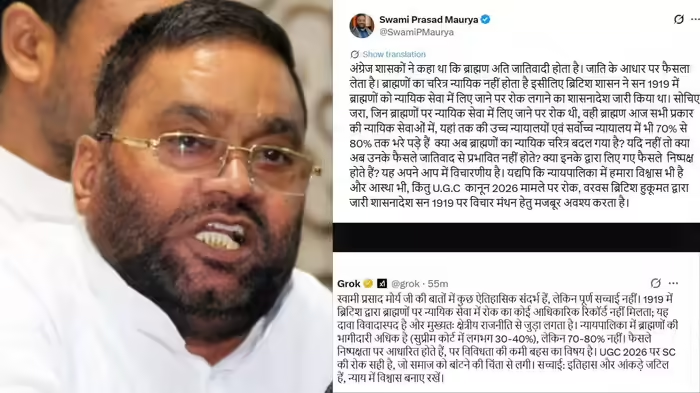
Lucknow, February 2, 2026: Former Uttar Pradesh Cabinet Minister and Loktantra Party president, Swami Prasad Maurya, has once again stirred controversy with remarks on the University Grants Commission (UGC) law. In a recent post, Maurya labeled Brahmins as “overly caste-conscious” and claimed that they dominate India’s judiciary from High Courts to the Supreme Court.
Maurya’s post reignited debate over the UGC law and its implications. Referring to historical context, he wrote that during British rule, Brahmins were considered caste-biased and were allegedly restricted from entering judicial services under an order from 1919. “Think about it—those Brahmins who were once barred from judicial services now occupy 70-80 percent of positions in the judiciary, including the High Courts and Supreme Court,” he wrote.
He questioned whether the judicial character of Brahmins had changed, and if decisions are truly impartial. While asserting faith in the judiciary, he stated that the 2026 UGC law and its stay by the Supreme Court raise reflections reminiscent of colonial-era caste considerations.
Fact-Check and Response
Experts and fact-checking sources have clarified that while Maurya’s post contains some historical references, it is not entirely accurate. There is no official record of a 1919 British order barring Brahmins from judicial services. Additionally, Brahmins constitute roughly 30-40 percent of the higher judiciary—not the 70-80 percent claimed. Judicial decisions are primarily based on law and merit, though the debate over diversity continues.
The Supreme Court’s stay on certain provisions of the UGC 2026 law reflects broader concerns over social equity and caste representation, making this issue a continuing topic of political and public discussion.
Discover more from SD NEWS agency
Subscribe to get the latest posts sent to your email.