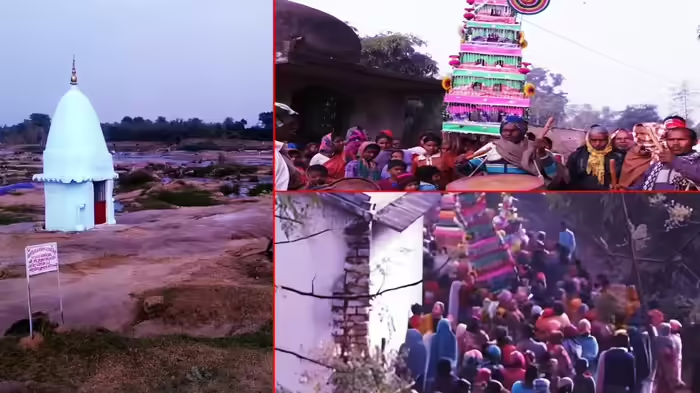
Ranchi, Jharkhand: Jharkhand’s Tusu festival is one of the most vibrant and culturally significant celebrations of the Kurmi and tribal communities, observed during the winter month of Paush after the harvest season. Steeped in folklore, sacrifice, and traditions, the festival honors the legendary heroine Tusu and marks the beginning of a new agricultural cycle.
Legends Behind Tusu
Two major folk tales are central to the festival, each highlighting courage, dignity, and sacrifice. One story tells of Tusu, a beautiful young girl from a poor farmer’s family, who defied a cruel king’s attempt to claim her. During a year of severe famine, the king doubled the tax burden on farmers, demanding their daughters as a means to survive. Tusu and her community chose resistance over submission. On Makar Sankranti, Tusu committed self-sacrifice by entering the waters of the Swarnarekha River, preserving her honor and inspiring generations.
Another legend revolves around Tusu Mani and her sisters, Sarla and Bhadu, during the Mughal era. A local Mughal commander, captivated by Tusu Mani’s beauty, sought to forcibly take her. To protect her chastity and family honor, she took a ritualistic plunge into the swollen Swarnarekha River. The site is now revered as Sati Ghat, where young unmarried girls honor her memory by establishing Tusu idols and singing songs of bravery and dignity.
Rituals and Cultural Significance
Though written historical sources are scarce, the festival remains deeply symbolic. “Tusu” literally refers to a maiden, and during the festival, girls perform prayers and rituals honoring Tusu (seen as an embodiment of Goddess Lakshmi or Saraswati), bathing in rivers at sunrise and offering prayers for prosperity and well-being.
The festival also marks the initiation of new agricultural work. On Makar Sankranti, the Akhain Jatra is observed, symbolizing the transition from post-harvest work to the new farming season. Traditional rituals include ceremonial washing and oiling of the feet of household members and cattle, symbolic sowing activities, and other rites considered highly auspicious for farmers.
Community Participation and Festivities
Tusu is celebrated extensively in the Panch Pargana region, including Saraikela-Kharsawan, East and West Singhbhum, Ramgarh, Bokaro, and Dhanbad. Starting from Agahan Sankranti on 15 December, young unmarried girls set up Tusu idols and worship them for a month. Villagers sing Tusu songs and perform dances in groups, often accompanied by traditional musical instruments. The festivities continue until Basant Panchami, with fairs, music, and vibrant celebrations marking the cultural richness of the region.
Concluding the Festival: The Tusu Immersion
The festival culminates on 15 or 16 January, when the symbolic Tusu figure, crafted from bamboo, colorful paper, and cloth into a temple-like structure called Chaudal, is paraded through villages with music and dancing before being immersed in the river. The Swarnarekha River, where the rivers Swarnarekha, Kanchi, and Radhu converge, serves as the sacred site for these rituals, making the festival both a cultural and spiritual landmark for the Kurmi and tribal communities.
Tusu thus represents not only sacrifice and courage but also renewal, prosperity, and communal harmony, bridging the agricultural cycle with age-old folklore and traditions.
Discover more from SD NEWS agency
Subscribe to get the latest posts sent to your email.