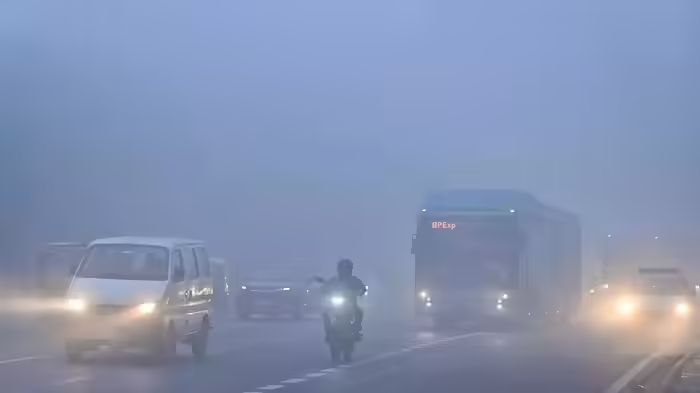
New Delhi: The Delhi-NCR region continues to reel under a bitter cold wave, with Palam recording its coldest morning in 20 years on Thursday. The minimum temperature dropped to 2.3°C, marking a significant deviation from normal. Dense fog across the city caused multiple flight delays, while air pollution levels remained extremely poor. Authorities have indicated that slight relief from the cold is expected in the coming days.
Record-Breaking Cold at Palam
Thursday morning saw the mercury at Palam fall to 2.3°C, the lowest in two decades. For context, the previous record low was observed on 8 January 2006, when the temperature hit 0.3°C. The maximum temperature on Thursday was recorded at 16.2°C, around 5 degrees below normal. This marks the fourth consecutive day of the cold wave in the capital.
Widespread Fog Across Delhi-NCR
Friday morning began with dense fog that reduced visibility in several areas to as low as 50 meters. Minimum temperatures recorded in different parts of the NCR included Lodhi Road: 3.4°C, Ridge: 4.5°C, Aya Nagar: 2.7°C, Gurugram: 5.3°C, Ghaziabad: 4.3°C, and Faridabad: 4.1°C. Delhi’s Safdarjung Observatory recorded a maximum temperature of 19.5°C—slightly below normal by 0.4°C—with a minimum of 2.9°C.
Weather Forecast
Meteorological authorities predict clear skies on Friday morning, with partial cloud cover in the evening. Daytime temperatures may rise to 22°C, while nights could remain chilly at 4°C. From 17 to 21 January, skies are expected to be partly cloudy, with maximum temperatures ranging between 5°C and 10°C, and minimums between 20°C and 24°C.
Air Pollution Remains Critical
Air quality remained extremely poor on Thursday, with Delhi recording an AQI of 343. Faridabad’s AQI was 235, Ghaziabad 321, Greater Noida 342, Gurugram 318, and Noida 344, placing five locations in the “very poor” category. Experts warn that pollution levels may rise above 400 in the next two to three days, aggravating health risks.
Discover more from SD NEWS agency
Subscribe to get the latest posts sent to your email.