Mathura (Uttar Pradesh):
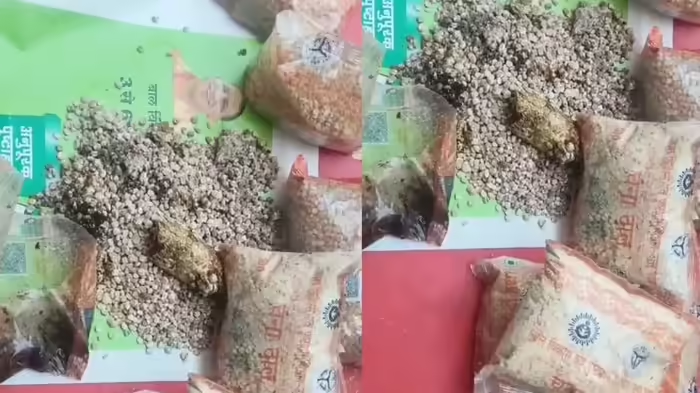
A serious case of negligence has come to light from an Anganwadi centre in Nagla Akha Alawal village under the Nainupatti Gram Panchayat of Mathura district, where beneficiaries were allegedly distributed rotten and substandard ration. Following complaints from villagers, the authorities have issued a notice to the Anganwadi worker and withheld her salary for one month.
According to local residents, the ration distributed at the centre was unfit for consumption, emitting a foul smell and showing signs of decay. Angered villagers refused to accept the ration, alleging that they were being forced to consume food “as dangerous as poison.” The matter escalated quickly and was brought to the attention of higher officials.
Two days ago, officials from the Child Development Department visited the centre in Govardhan tehsil after receiving complaints. Upon inspection, the ration and supplementary nutrition were found to be of poor quality. The Anganwadi worker reportedly failed to provide a satisfactory explanation on the spot.
Taking strict action, the Child Development Project Officer (CDPO), Govardhan, issued a show-cause notice to the Anganwadi worker. She has been warned sternly, her distribution work has been suspended for one month, and she has been directed to submit a written explanation within two days.
A Grave Threat to Vulnerable Groups
Experts warn that distributing expired or fungus-infested food is not merely an act of corruption but amounts to criminal negligence. Malnourished children, pregnant women, and lactating mothers already have weakened immunity, making them extremely vulnerable to infections. Consumption of spoiled food, rancid oil, or moldy supplements can have life-threatening consequences for them.
Systemic Failures and Fake Monitoring
Although a provision for social audit exists in Anganwadi centres, lack of awareness in rural areas often reduces monitoring to mere paperwork at the supervisor and CDPO levels. Several similar cases have surfaced in districts like Agra and Kanpur, where action was taken against officials, yet grassroots-level accountability remains weak.
The government is now pushing for OTP-based and biometric-enabled ration distribution to curb black marketing. However, ensuring the quality of ration through digital systems remains a major challenge.
This incident raises serious concerns over how private interests and administrative lapses continue to jeopardize the health and lives of society’s most vulnerable, despite repeated government warnings and regulations.
Discover more from SD NEWS agency
Subscribe to get the latest posts sent to your email.