Dehradun, Uttarakhand:
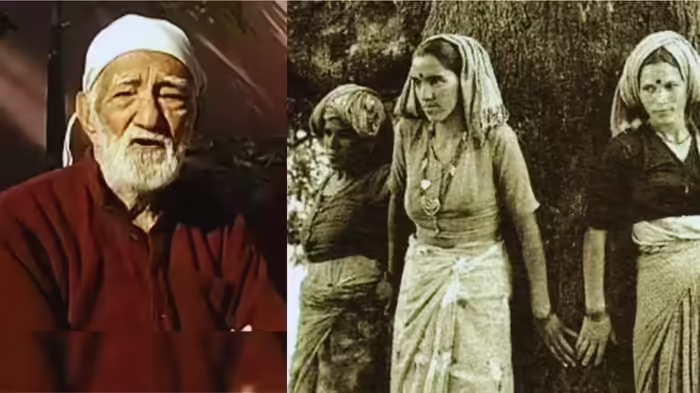
On the occasion of his birth anniversary, the world remembers Sunderlal Bahuguna, the legendary environmentalist whose tireless efforts transformed India’s approach to forest conservation. Widely regarded as a symbol of environmental protection, Bahuguna’s life and work continue to inspire generations.
Born on 9 January 1927 in Silayara village, Tehri district, Bahuguna completed his early education locally before moving to Lahore for higher studies, earning a degree in Arts. Choosing the path of social service over personal comfort, he, along with his wife Vimala Nautiyal, founded the Parvatiya Navjeevan Mandal, an organization dedicated to the social, educational, and moral upliftment of hill communities.
Early Social Work
Bahuguna’s social consciousness deepened in 1949 after connecting with leaders Miraben and Thakkar Bappa. He actively promoted the welfare of Dalit students, establishing the Thakkar Bappa Hostel in Tehri and championing their right to enter temples—a bold stand during that era.
The Chipko Movement: A Global Symbol of Environmental Activism
Bahuguna is best known for leading the Chipko Movement, which began in the early 1970s in the hilly regions of what is now Uttarakhand (then Uttar Pradesh). Rampant deforestation for roads and commercial interests prompted local resistance. On 23 March 1973, women of Reni village, led by Gaura Devi, famously hugged trees to prevent logging, declaring: “Cut us first, but spare the trees.”
This act of non-violent resistance compelled authorities to halt the tree felling, marking the birth of the Chipko Movement. Environmentalists Sunderlal Bahuguna and Chandi Prasad Bhatt provided leadership, and the movement quickly spread across the region, eventually gaining national and international recognition.
The Chipko Movement not only raised awareness about environmental conservation in India but also globally influenced ecological activism. Its success led to a 15-year ban on commercial logging in Himalayan forests in 1980, and it became a powerful symbol of eco-feminism, highlighting women’s central role in environmental protection.
Philosophy and Legacy
Bahuguna famously stated that ecology is the true economy, advocating development that maintains harmony with nature. He supported small-scale hydroelectric projects while opposing large dams like the Tehri Dam, coining the slogan:
“Dhar aench dala, bijli banawa khala-khala” — Plant trees in upper regions, generate electricity through small projects in lower areas.
In 1971, he undertook a 16-day fast for environmental protection. Embracing a life of simplicity and high ideals, Bahuguna dedicated himself to safeguarding rivers, forests, and the natural world. He is also remembered as one of the first environmentalists to educate people about the distinction between beneficial and harmful plants.
Sunderlal Bahuguna’s vision and activism remain a beacon for environmentalists, and the Chipko Movement continues to resonate as a model of non-violent, community-driven conservation.
Discover more from SD NEWS agency
Subscribe to get the latest posts sent to your email.