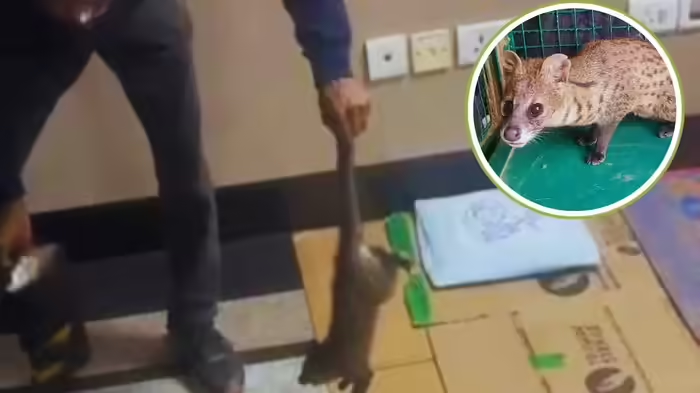
Panic briefly gripped the prestigious Sanjay Gandhi Postgraduate Institute of Medical Sciences (SGPGI) in Lucknow after a rare Indian civet cat was spotted inside the pulmonary ward building late Sunday night.
The incident occurred at the third-floor waiting hall, where patients, attendants, and hospital staff were startled upon noticing the nocturnal wild animal roaming the premises. The sight led to immediate chaos, following which hospital security alerted the control room around 1 am.
Swift Rescue Operation Prevents Any Harm
Upon receiving the alert, additional security personnel reached the spot and informed a wildlife rescue team. Wildlife expert Irshad, who led the rescue operation, safely captured the civet cat after sustained efforts. The animal was later released into the Gautam Khera forest, ensuring its safety and well-being.
Hospital authorities confirmed that no injuries were reported, and the situation was brought under control without causing panic among patients.
Importantly, officials reiterated that capturing or harming a civet cat is a punishable offence under wildlife protection laws, emphasizing the need for caution and awareness.
What Makes the Civet Cat Special?
The civet cat, known in Hindi as “Kasturi Bilav” or “Gandhmarjar”, is a protected species under the Wildlife Protection Act and plays a crucial role in maintaining ecological balance.
- Nocturnal Nature: Civet cats are shy, nocturnal mammals that are active primarily at night and usually avoid human settlements.
- Ecological Importance: They help control rodent populations and contribute significantly to seed dispersal, aiding forest regeneration.
- Distinctive Musk: Civets are known for secreting a unique musk-like substance, historically used in the perfume industry.
- World’s Costliest Coffee Connection: The civet cat is famously linked to Kopi Luwak, the world’s most expensive coffee, produced from coffee beans that pass through the animal’s digestive system.
Unusual but Safe Encounter
Experts believe the animal may have strayed into the hospital campus while searching for food during nighttime hours. Authorities have assured enhanced vigilance to prevent similar incidents in the future.
The rare encounter highlighted the growing interaction between urban spaces and wildlife, underscoring the importance of humane rescue efforts and wildlife conservation.
Discover more from SD NEWS agency
Subscribe to get the latest posts sent to your email.