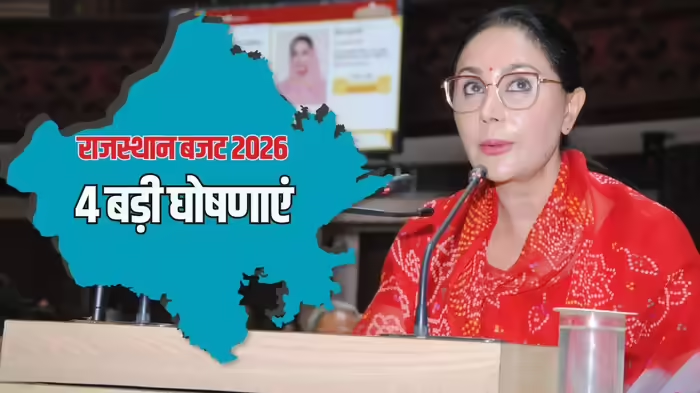
Jaipur, February 11, 2026: Rajasthan’s Deputy Chief Minister and Finance Minister, Diya Kumari, unveiled a budget packed with major initiatives to accelerate tourism, heritage preservation, and religious site development across the state. The proposals aim to strengthen cultural tourism while creating new avenues for economic growth. Here’s a detailed look at the four key announcements from the budget speech:
1. Ultra-Luxury Tourism Zone in Khuri, Jaisalmer & Modern Facilities in Kuldhara
The budget proposes establishing an ultra-luxury Special Tourism Zone (STZ) in Khuri, Jaisalmer. A modern tourist facility center will also be developed in Kuldhara. Additionally, a “Thar Cultural Circuit” connecting western Rajasthan districts—including Jaisalmer, Bikaner, Jalore, Jodhpur, and Barmer—is planned. A war museum is also proposed in Jhunjhunu to enrich historical and cultural tourism.
2. Beautification of Religious Sites and Pilgrimage Routes
Major religious sites, including Khatu Shyamji, Pushkar, Deshnok, Diggi, and Mandawa, will see their access routes upgraded into model roads. The initiative aims to improve facilities for pilgrims and tourists. Special arrangements for festival celebrations, such as Holi and Diwali, including decorated temples and ceremonial aartis, have also been planned. Under the Senior Citizens Pilgrimage Scheme, 6,000 elderly citizens will be flown to sacred destinations including Pashupatinath (Kathmandu), while 50,000 others will travel by AC train to various pilgrimage sites.
3. Shekhawati Havelis to Receive Global Recognition
Under the Shekhawati Haveli Conservation Scheme, over 660 havelis across Jhunjhunu, Sikar, and Churu will undergo facade restoration, cleanliness drives, and aesthetic upgrades. Financial assistance will be provided to owners interested in developing their havelis as tourism units. The government also plans to push for Shekhawati’s havelis to be included on the UNESCO World Heritage list. Additionally, the preservation and restoration of state-identified stepwells (bawaris) will be undertaken.
4. Rural Tourism, Tourist Assistance Force, and New Policies
To promote rural tourism, homestay operators will receive interest subsidies on bank loans. A 10-crore allocation has been made for beautification, women staffing, and guide services under the Tourist Assistance Force. A new policy will allow development of dharamshalas on vacant Devsthan land under the Build-Operate-Transfer (BOT) model. Flying training organizations will be set up in Sawai Madhopur and Banswara to further enhance tourism-related infrastructure and skill development.
The budget reflects the state government’s commitment to combining cultural heritage preservation with modern tourism development, offering both residents and visitors a richer and more diverse experience across Rajasthan.
Discover more from SD NEWS agency
Subscribe to get the latest posts sent to your email.