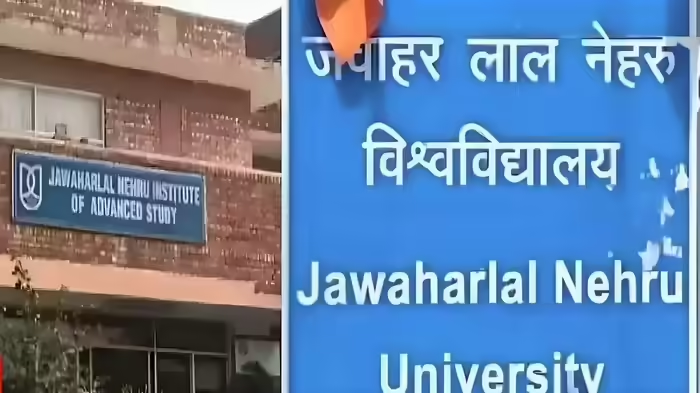
New Delhi, Feb 4: Protests have intensified at Jawaharlal Nehru University (JNU) after the administration suspended five PhD scholars, including all four office-bearers of the JNU Students’ Union (JNUSU), over allegations of vandalism and disruption on campus.
The university said the disciplinary action relates to an incident on November 21 involving alleged damage to facial-recognition access gates installed at the Dr B.R. Ambedkar Central Library, along with violence and obstruction of academic and administrative functioning. The students’ union has denied the allegations.
On February 2, the JNU administration rusticated JNUSU president Aditi Mishra, vice-president K. Gopika, general secretary Sunil Yadav, joint secretary Danish Ali, and former JNUSU president Nitish Kumar for two semesters — the Winter and Monsoon semesters of 2026. They have been barred from entering the campus and directed to deposit fines of ₹20,000 each within 10 days. Students said that 19 others who participated in protests were fined ₹19,000 each.
The action has drawn sharp criticism from both the students’ union and the JNU Teachers’ Association (JNUTA), which described the move as excessive and demanded that the rustication orders be withdrawn immediately. The JNUSU accused the administration of attempting to weaken the student body, claiming the orders were issued just ahead of planned protests against UGC equity regulations.
Late-night meetings were held across campus following the announcement, with student groups resolving to oppose the decision. On Tuesday night, students organized a torch march not only against the disciplinary action but also to press demands related to UGC equity rules and the proposed Rohith Vemula Act.
JNUSU general secretary Sunil Yadav said the punishment was imposed because student leaders had been vocal on campus issues. He added that students had been protesting against what they called increased surveillance through magnetic gates and facial-recognition cameras in the central library, as well as privatization and other policy concerns.
Discover more from SD NEWS agency
Subscribe to get the latest posts sent to your email.