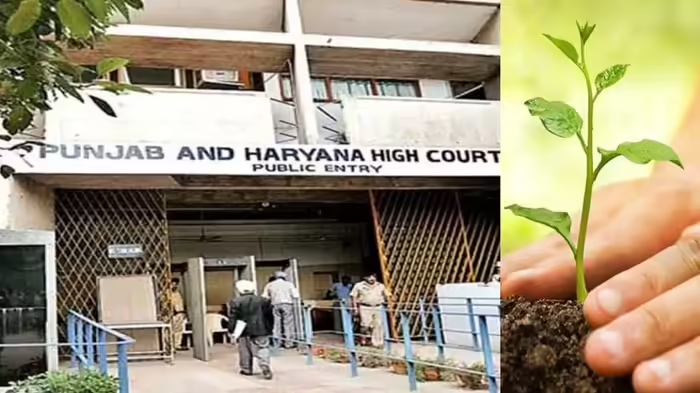
Chandigarh: The Punjab and Haryana High Court has ordered the release of a man convicted for causing death by rash and negligent driving, placing him on probation with a unique directive to plant 50 native trees. Justice Vinod S. Bhardwaj emphasized the importance of a reformative approach rather than punitive revenge, highlighting the broader goal of societal improvement.
Court’s Reasoning
The High Court stressed that the purpose of the judicial system is not to punish for the sake of vengeance but to create a mindset where individuals understand that obeying the law benefits everyone. The convict and the victim’s families had already reached an amicable settlement, which the court considered in its decision.
The man had previously been convicted under sections 279 (rash driving), 337 (causing hurt by negligent acts), and 304-A (causing death by negligence) of the Indian Penal Code by a lower court and sentenced to two years in jail. An appeal to the Ludhiana Sessions Court was rejected, prompting the convict to approach the High Court. His lawyer, Amit Khari, argued that more than 11 years had passed since the incident, during which the convict had maintained a clean record, and the accident had occurred without intent or deliberate negligence.
The Incident
The case dates back to 2014, when the man allegedly collided with a motorcycle carrying two individuals. The accident resulted in the death of a woman seated at the back, while the court found no evidence suggesting criminal intent or that the convict posed a societal threat.
Reformative Justice Inspired by Cesare Beccaria
The court cited Italian criminologist and jurist Cesare Beccaria, noting that punishment is inherently necessary but should be applied with moderation. Beccaria’s principles from “On Crimes and Punishments” emphasize that the criminal justice system’s legitimacy relies on achieving its objectives with minimum harm.
Following this philosophy, the court directed that the convict be released on probation, subject to maintaining good conduct for two years, and undertake community service by planting 50 native trees. The convict must coordinate with the Divisional Forest Officer in Ludhiana for tree plantation and ensure their care for five years.
This landmark judgment reflects the court’s commitment to restorative and reformative justice, balancing accountability with social contribution.
Discover more from SD NEWS agency
Subscribe to get the latest posts sent to your email.