
Satna:
Once an inseparable part of India’s railway identity, the sight of porters in red shirts, brass badges strapped to their arms, calling out “Sahab… Coolie!” is fast fading into history. At Satna Railway Station, the porter community—once considered the station’s pride—is now fighting a grim battle for survival as modernization steadily erodes their livelihood.
While technological upgrades have transformed Indian Railways into a more passenger-friendly network, the same changes have pushed traditional porters to the margins. Escalators, lifts, battery-operated carts, platform redesigns, and most significantly, wheeled trolley bags, have drastically reduced the need for manual luggage carriers.
A Community on the Brink
India has over 20,000 licensed railway porters, of whom 42 are stationed at Satna, including one woman. For them, the trolley bag has emerged as the single biggest threat to survival. Where passengers once depended on porters to carry heavy trunks and steel suitcases, today even elderly passengers effortlessly pull wheeled luggage themselves.
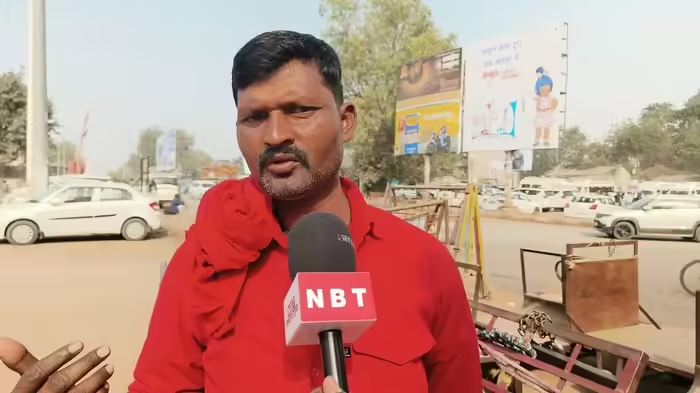
“With escalators and lifts everywhere, passengers don’t feel the need for us anymore,” says Chandan Yadav, a porter who has worked at Satna station for over 15 years. “For travelers, this is development. For us, it is destruction.”
Income Plummets, Anxiety Rises
The economic impact has been devastating. Porters who once earned ₹500–700 per day now struggle to make ₹100–200, despite working all day. Although the railway has fixed a rate of ₹60 for carrying up to 40 kg, the real problem lies in the lack of work.
Most trains at Satna halt at Platform No. 1, which has two exits located just a short distance away. Passengers disembark, pull their luggage, and exit within minutes—leaving porters waiting helplessly on the platform.
‘Facilities Increased, Our Jobs Vanished’
Another porter, Umesh Kumar Sharma, blames privatization and new services like battery cars for their plight.
“The railways are rightly improving passenger facilities, but in the process they have kicked us out of employment,” he says. “There is nothing left for us to do.”
Hope Linked to the Past, Expectations from the Future
Many porters fondly recall the tenure of former Railway Minister Lalu Prasad Yadav, who in 2008 facilitated the absorption of porters into Group-D railway jobs as gangmen. That decision still serves as a beacon of hope.
Today, Satna’s porters look towards the central government and the upcoming Union Budget, demanding similar rehabilitation measures. Their primary demand is official absorption into Group-D services, allowing them a dignified and stable livelihood.
A Profession the Next Generation Rejects
The crisis has also broken the generational chain. Porter families admit that their children no longer wish to enter the profession. With declining income and no social security, many elderly porters want to quit—but lack alternative skills or employment options.
Trapped between fading demand and advancing age, they continue to wait on the platforms, clinging to a profession that once defined them.
As Indian Railways races toward modernization, the silent suffering of its oldest workforce raises a pressing question: Can development be called complete if it leaves behind those who once carried its weight?
Discover more from SD NEWS agency
Subscribe to get the latest posts sent to your email.