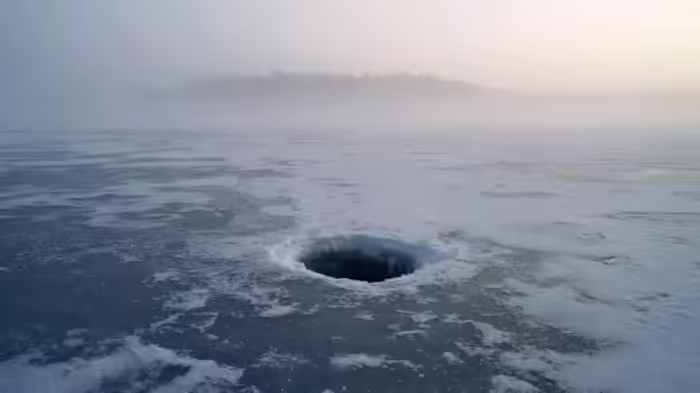
New Delhi: Amid the dense winter smog, researchers have observed over 90 “fog holes” in Delhi during December and January. These phenomena, which appear as gaps or holes in fog cover, have also been noted in other parts of North India, including Punjab, Haryana, northeastern Rajasthan, northern Uttar Pradesh, and northeastern Bihar. However, the concentration in Delhi-NCR is unusually high.
Fog Holes on the Rise in Urban Areas
According to research published by the American Geophysical Union, fog holes have been appearing globally for nearly two decades, but their prevalence in Delhi’s urban environment is particularly significant. Most of these fog holes are observed in densely populated cities, where urban heat and pollution slow the formation and persistence of fog.
The study notes that persistent and polluted fog in the Indo-Gangetic Plains—including North India, Pakistan, Nepal, and Bangladesh—has been causing disruptions to air, rail, and road transport every year. NASA satellite imagery was used to analyze these fog holes, which are also seen in other heavily populated regions in Asia, Europe, and the US.
Delhi Records Highest Number of Fog Holes
During the study period, Delhi recorded more than 90 fog holes. The city’s rising temperatures, heavy pollution, and dense urbanization contribute to the early dissipation of fog. Areas with more greenery, such as the Ridge, Aravalli, and Aya Nagar, retain fog for longer periods, while regions like South Ex, RK Puram, and Punjabi Bagh see fog dissipate more quickly.
Impact on Pollution and Health
Fog holes can exacerbate localized smog, trapping pollution and raising temperatures in affected areas. Experts highlight the need for further research to understand their environmental and public health impact. According to Dr. Mahesh Palawat, Chief Meteorologist at Skymet, the growth of fog holes in Delhi is closely linked to urban heat, traffic density, and population concentration.
Discover more from SD NEWS agency
Subscribe to get the latest posts sent to your email.