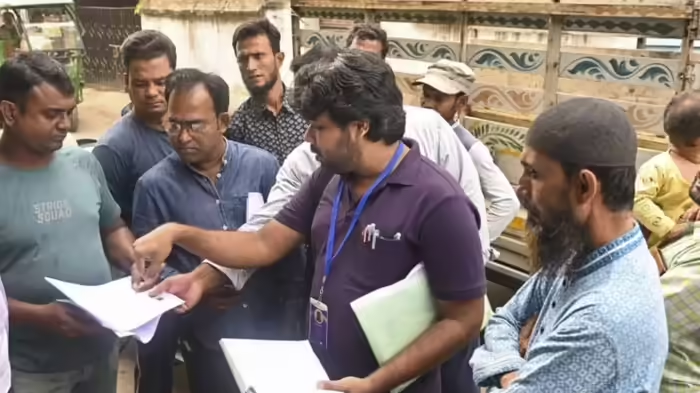
Jaipur: The Special Intensive Revision (SIR) exercise in Rajasthan has revealed that over 24 lakh voters could potentially have their names removed from the electoral rolls. The exercise, initiated on 4 November and continuing until 4 December, aims to verify and update the voter list based on records from the 2002 SIR list.
Digital Verification Against 2002 SIR Rolls
Chief Electoral Officer Naveen Mahajan explained that after digitization, every voter’s record is being matched with the 2002 SIR list to confirm whether their parents’ names appear in the old records. Those whose details do not match will receive notices after the draft electoral roll is published on 9 December, giving them an opportunity to submit the necessary documents to retain their names. Failure to do so will result in their removal from the voter list.
SIR Exercise Across 12 States and Union Territories
This SIR exercise began after the Bihar elections and is being conducted simultaneously in 12 states and Union Territories, including Rajasthan. Once the draft electoral roll is published on 9 December, voters and booth-level agents will have one month to file claims or objections. After addressing all cases, the final electoral roll will be published on 7 February 2026.
Current Status: Millions of Records Already Matched
Rajasthan currently has approximately 5.46 crore voters. During the house-to-house enumeration, 52,222 booth-level officers (BLOs) distributed enumeration forms (EF) to all voters. By 28 November, 4.59 crore forms had been collected and digitized. Of these, 4.34 crore voters have been successfully matched with the 2002 SIR list and will automatically be included in the final roll.
However, 24,41,673 voters have yet to match with the 2002 SIR list, a number that could increase as digitization progresses until 4 December.
District-Wise Highlights
- Jaipur: 1,95,489 unmatched voters
- Jodhpur: 1,47,016
- Bhilwara: 1,29,574
- Sikar: 1,15,713
- Bikaner: 1,11,744
- Udaipur: 1,03,286
How the Mapping Process Works
Under the SIR exercise, BLOs collect personal and family details, including name, address, ward, and EPIC number, from voters using enumeration forms. The data is uploaded digitally, where it is automatically matched with the 2002 SIR electoral roll. For voters who moved from other states, BLOs download relevant SIR records from 2002–2005 for verification.
Where the match is successful, voters are exempt from submitting 13 required documents. Where the match fails, voters must provide supporting documents during the claims and objections period to avoid deletion from the list.
Ensuring Accuracy and Voter Rights
The exercise is aimed at maintaining accurate voter records and ensuring that only eligible citizens are included in the electoral roll. Voters whose names do not match need not panic—they simply need to submit the necessary documents in time to secure their voting rights.
Discover more from SD NEWS agency
Subscribe to get the latest posts sent to your email.