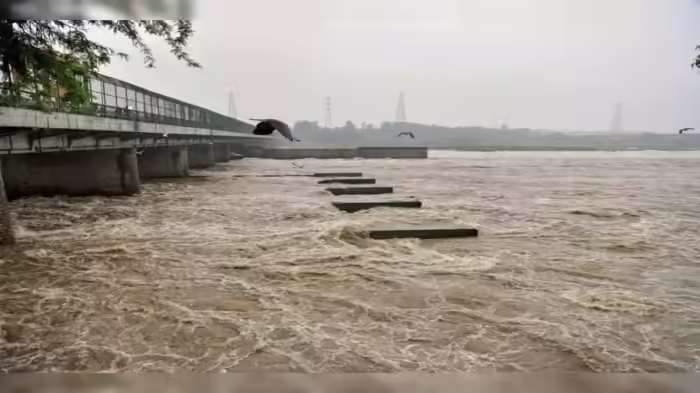
New Delhi: The contamination of the Yamuna River is not solely the result of Delhi’s drains. The Delhi Jal Board (DJB) has stated that a significant share of the pollution originates from Haryana and Uttar Pradesh. The DJB has raised the issue with the Upper Yamuna River Board (UYRB) and has written to both state governments on November 10, highlighting their role in worsening the river’s condition.
According to the letter, industrial waste discharged from Panipat and Sonipat in Haryana increases both pollution and ammonia levels in the Yamuna. Elevated ammonia regularly triggers water supply crises in Delhi, the DJB noted.
32% of Najafgarh Drain Pollution Comes From UP and Haryana
As per DJB officials, 682–700 MGD (million gallons per day) of wastewater flows from the Najafgarh Drain into the Yamuna every day. Of this, nearly 32% originates from drains in Uttar Pradesh and Haryana.
- Gurgaon’s L-1 drain and Drain No. 6 from Kundli’s industrial area discharge wastewater into the Badshahpur drain, which eventually flows into the Najafgarh drain.
- Together, these drains contribute 105–110 MGD of polluted water.
- Gurgaon’s L-2 and L-3 drains also empty into the Najafgarh drain.
- On the UP side, industrial waste from Ghaziabad reaches the Shahdara drain through the Ghazipur drain, and this polluted water ultimately ends up in the Yamuna.
The Shahdara drain stretches 13.4 km through East Delhi, carrying waste from multiple industrial areas including Jafrabad, Gandhi Nagar, Vishwas Nagar, Karkardooma, Madhu Vihar, and Patparganj.
Call for Repairs and In-Situ Treatment
The DJB has directed the Haryana and UP governments to take immediate steps to control pollutant flow into the Yamuna. These include:
- Exploring in-situ treatment for Drain No. 2
- Repairing both embankments of Drain No. 6
- Converting the effluent channel along Drain DD-8 into a covered drain to stop open discharge
The DJB emphasised that controlling upstream pollution is essential for restoring the Yamuna’s water quality and preventing recurring water shortages in the national capital.