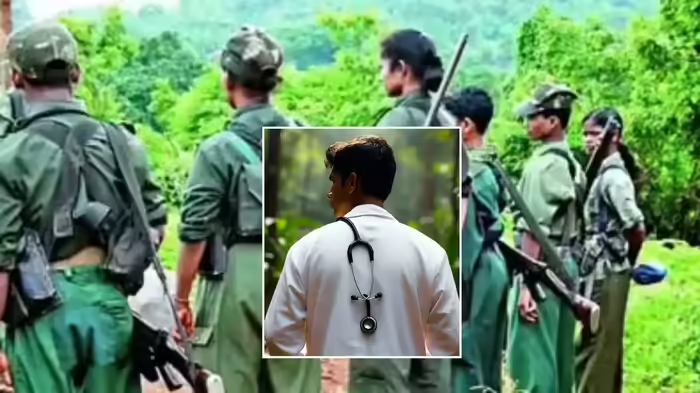
Hyderabad: Amid the central government’s nationwide drive to curb Maoist activities, a startling revelation has emerged from Telangana. A recently surrendered Maoist leader has disclosed the identity of a mysterious doctor who provided critical medical support to insurgents in challenging forest terrains. The security agencies first became aware of this doctor back in 2013, but his full role remained largely unknown—until now.
Punjab-Trained Doctor in the Maoist Ranks
The doctor, identified as Dr. Rafiq, also known by the alias Mandip, completed his MBBS in Punjab before joining the CPI (Maoist). According to surrendered Maoist cadre M. Venkataraju, aka CNN Chandu, Dr. Rafiq spent years setting up a makeshift medical system in the dense forests of Bastar, Chhattisgarh.
As the only formally trained medical professional in the region, Dr. Rafiq treated both Maoist cadres and tribal villagers, often performing emergency surgeries under extremely limited resources. On one occasion, he reportedly performed a delicate procedure to remove a bullet near a Maoist’s heart by torchlight in a remote jungle camp.
Training and Manuals for Field Medicine
Dr. Rafiq also trained paramedics and local cadres, creating manuals for managing battlefield injuries, snake bites, malaria, gastroenteritis, and gunshot wounds. Chandu revealed that these manuals standardized emergency care in areas with no formal healthcare, ensuring continuity even after Dr. Rafiq left the region.
By 2016, he reportedly moved from Dandakaranya to Jharkhand, where he remains at large. Early intelligence reports from 2013 first mentioned him as a ‘mysterious doctor’ leading the Maoist medical wing. Further reports in 2018 noted that his wife had also treated senior Maoist commander Prashant Bose.
Documenting Tribal Herbal Remedies
Working mostly in Abujhmad, the Maoists’ main stronghold, Dr. Rafiq earned immense respect from locals, who often regarded him as a savior. He documented tribal herbal medicines and integrated them into Maoist medical manuals. These manuals, which combine traditional prayers with modern treatment methods, continue to circulate in remote areas.
Chandu added that in tribal belief systems, illnesses like malaria were often considered a sign of divine displeasure. Dr. Rafiq’s approach combined spiritual practices with medical treatment, ensuring that villagers sought both prayer and medicine.
A Parallel Health Network in the Forests
While security forces tracked insurgents’ movements and weapons, Dr. Rafiq quietly built a parallel medical network in the forests—a system that provided emergency care and training in some of the country’s most inaccessible areas. With increasing surrenders among Maoists, uncovering his activities has become increasingly significant for intelligence agencies.
Discover more from SD NEWS agency
Subscribe to get the latest posts sent to your email.